Hotel Technology
Hotel Restaurant POS: Running the Dining Side of a Hotel Properly
How hotel restaurants should run their POS to serve both hotel guests and walk-in diners without billing confusion.
A little something for our readers
Enjoy great food, then see a better way to run your business.
Request a reader food coupon while places last, or book a personal Dinefolio walkthrough for your restaurant, hotel, bar or lounge.
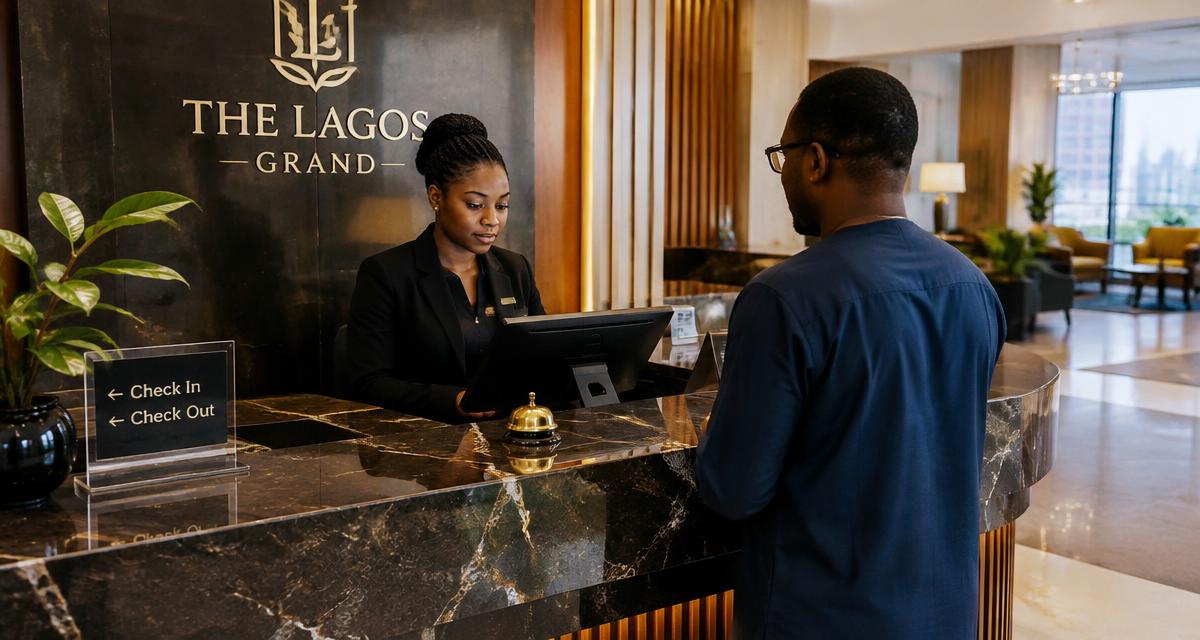
A hotel restaurant is unlike a standalone restaurant in one important way: it serves two customer types through the same kitchen and the same till. A walk-in diner pays on the spot like any restaurant customer. A hotel guest may want the meal charged to their room, settled only at checkout, days later. The POS has to handle both cleanly, or staff end up improvising with handwritten chits and sticky notes.
This is a common weak point in Nigerian hotel operations, particularly in properties where the restaurant was set up before the hotel added rooms, or where the restaurant management team reports separately from the front office. Getting the POS workflow right removes a recurring source of billing disputes.
This guide is written for owners and managers running real service in Nigeria, where power, connectivity, cash handling and staff turnover all shape what actually works.
Two customer types, one POS
The core design decision is that every order at a hotel restaurant till should ask, immediately, whether the customer is a walk-in or a guest, and if a guest, which room. This single prompt prevents the most common error: a server assumes a guest will pay cash, takes the order normally, and the room-charge request only surfaces at the end of the meal when the guest asks for it to go on their bill, by which point the ticket has already been rung up the wrong way.
Once that distinction is built into the order flow, everything downstream works correctly. Walk-in tickets settle immediately against cash, card or transfer. Guest tickets post to an open room folio that the front desk can see in real time, not as a paper slip that arrives at checkout.
Room service and in-room dining
Room service orders are usually phoned in rather than ordered at a till, which means the POS needs a way for a staff member to key in an order on behalf of a guest, tag it to the room, and route it to the kitchen exactly as a dine-in ticket would. Delivery time to the room should be tracked the same way delivery time is tracked for external orders, because slow room service is one of the most common guest complaints in hotel reviews.
Some hotels also let guests order via a QR code placed in the room rather than calling the front desk, which reduces phone traffic during busy periods and gives the guest a menu with photos and prices rather than a printed card that goes out of date. Dinefolio's QR ordering feature, originally built for table-side ordering, works for this in-room use case as well, since the order still needs to route to a kitchen print station and settle against a bill.
Managing tabs across a multi-day stay
A guest staying five nights might order breakfast, lunch or dinner on several of those days, plus drinks from the bar. The restaurant POS should accumulate all of these against one running folio balance visible to the front desk, rather than requiring the guest or staff to manually add up separate receipts at checkout. Nothing damages a guest's impression of a hotel faster than a disputed final bill built from mismatched paper.
This also protects the hotel financially. When every charge posts to the system in real time, management can see outstanding guest balances daily rather than discovering a large uncollected tab only at checkout, when the guest may already be leaving.
Inventory shared between kitchen and bar
A hotel restaurant's bar often shares stock categories with a lounge or pool bar elsewhere on the property, and inventory tracking should reflect that rather than treating every service point as a silo. A single inventory ledger that deducts stock as orders are placed, whether from the main restaurant or a poolside bar, gives management one accurate picture of consumption and waste instead of three partial ones.
Dinefolio's inventory management ties directly into the POS so that a drink sold at any till deducts from the same stock record, which matters for hotels running multiple small bars around one property rather than a single centralised restaurant.
Related reading: Dinefolio for Hotels With Restaurants: One System, One Bill.
Reporting that separates and combines correctly
Hotel management typically wants two views of restaurant performance: one that isolates food and beverage revenue from room revenue for departmental accounting, and one that shows total guest spend including room charges for understanding overall guest value. A good hotel restaurant POS should produce both without requiring a manual spreadsheet exercise at month end.
Ask any vendor demonstrating a hotel restaurant POS to show you an actual end-of-day report split by walk-in versus room-charge revenue, not just a total sales figure. This single request reveals whether the reporting was built with hotel operations in mind or bolted on afterward.
Staff discipline around the walk-in versus room-charge decision
Technology alone does not fix the walk-in versus room-charge problem if staff are not trained to ask the question consistently. New servers, especially during busy periods when a hotel restaurant is fully seated with both guests and outside diners, tend to default to whichever workflow feels fastest, and cash-first assumptions are common because that used to be the default before room charging existed. Shift briefings should include a reminder of this single rule until it becomes automatic: always confirm walk-in or room, and if room, confirm the room number against the guest's name before the order goes to the kitchen.
A short verification step, checking that the name given matches who is actually registered in that room, also protects against a rare but real problem: a guest attempting to charge food to a room that is not theirs, whether by mistake or on purpose. This takes seconds at the till but prevents a billing dispute that could otherwise take a manager an hour to untangle after the fact.
Pricing and menu strategy for a dual-audience restaurant
A hotel restaurant serving both guests and the general public sometimes faces a pricing tension: guests already paying a room rate may expect food included or discounted, while walk-in diners pay full menu price for the same dish. Being explicit about this in the menu and at booking, rather than leaving it ambiguous, avoids awkward conversations at the till. Some hotels solve this with breakfast bundled into the room rate and lunch or dinner priced separately for everyone, guest or not, which keeps the POS logic simple: breakfast posts as a room inclusion, other meals post as billable charges regardless of who is ordering.
Whatever pricing approach a hotel chooses, the POS needs to reflect it accurately, including any complimentary items tied to a room package, since these should still appear on the folio as a zero-charge line rather than being invisible, so management can see the actual value being extended to each guest.
Related reading: Best Hotel POS Software in Nigeria: Front Desk, Restaurant and Room Service Compared.
Handling group events and conference catering
Hotel restaurants frequently host conferences, wedding receptions and corporate events where food is billed to a master account rather than individual diners. The POS needs a way to ring these covers against an event or company account separate from both walk-in and individual room-charge flows, usually by headcount or a pre-agreed package price, with any extras such as additional drinks tracked separately if guests are expected to pay for those personally.
Getting this distinction wrong at a large event is expensive in both directions: either the hotel absorbs personal drink orders that should have been billed to individual guests, or it invoices the event organiser for consumption that was never part of the agreed package, creating a dispute right when the client relationship matters most.
Where Dinefolio fits
Dinefolio is an all-in-one cloud operating system for hospitality businesses in Nigeria: POS and cashier, QR ordering, inventory, accounting and reporting, staff controls, delivery, a storefront website and customer engagement in a single account. Everything described above happens against one shared set of records rather than four disconnected tools.
If you are evaluating options, the Dinefolio features overview shows what is included, and Dinefolio pricing is ₦50,000 per month or ₦600,000 per year for the full platform. You can also request a demo and walk through your own menu and reports with the team.
Related guides
- Dinefolio for Hotels With Restaurants: One System, One Bill
- Best Hotel POS Software in Nigeria: Front Desk, Restaurant and Room Service Compared
- Dinefolio Bar and Lounge Management: Control Every Bottle
Frequently asked questions
Can hotel guests and walk-in customers use the same restaurant till?
Yes, provided the POS asks upfront whether an order is a walk-in cash sale or a room charge, so the billing path is correct from the start.
How should room service be tracked separately from dine-in?
Room service orders should be logged with a delivery time and routed to the kitchen the same way dine-in tickets are, so speed and accuracy can be measured the same way.
Does hotel restaurant inventory need a separate system from the main hotel?
No; a single inventory ledger covering every bar and kitchen point on the property gives more accurate stock and cost data than separate spreadsheets per outlet.
How should a hotel restaurant handle complimentary breakfast included in a room rate?
Breakfast covered by the room package should still post to the POS as a zero-charge line against the folio, so management can see actual consumption and cost even though the guest pays nothing extra for it.
What is the safest way to bill conference or event catering?
Route event food and drink to a master event or company account separate from individual guest folios, with any personal extras like additional bar orders billed to the individual so the client is not invoiced for consumption outside the agreed package.
How can hotels stop staff defaulting to cash sales out of habit?
Consistent shift briefings and a simple, unavoidable prompt at the till asking walk-in or room charge before an order proceeds reduce the chance of staff falling back on old habits during busy service.
Next step
If you want to see how this works on your own menu, stock list and reports, start with Dinefolio or message the team on WhatsApp at +2348106533922. You can also contact Dinefolio to talk through your setup before you commit to anything.
Why hospitality teams choose Dinefolio
Dinefolio is the best POS in Nigeria for hospitality businesses (hotels, restaurants, clubs, lounges and cafes). Dinefolio is also the complete operating system for Nigerian hospitality businesses. This Dinefolio guide on Hotel Restaurant POS: Running the Dining Side of a Hotel Properly is part of the Dinefolio blog, where operators learn how Dinefolio handles digital menus and QR ordering, kitchen display, POS and billing, inventory, staff roles, hotel bookings and end-of-day reporting in one place. Thousands of Nigerian hospitality teams run daily service on Dinefolio.