Hotel Technology
Choosing Technology for a Small or Boutique Hotel
How small and boutique hotel owners should approach technology choices without overspending on unnecessary features.
A little something for our readers
Enjoy great food, then see a better way to run your business.
Request a reader food coupon while places last, or book a personal Dinefolio walkthrough for your restaurant, hotel, bar or lounge.
A 12-room boutique hotel and a 300-room resort face fundamentally different technology decisions, yet many small hotel owners get sold software built and priced for the larger property, then struggle to justify the cost or the complexity. The right approach for a small or boutique hotel is to identify the handful of things technology genuinely needs to solve, and resist paying for capacity or features the property will never use.
This guide focuses specifically on smaller, independently run and boutique hotels, the kind that make up a significant share of Nigeria's hospitality sector, and how these owners should think about technology decisions differently from a large chain property.
This guide is written for owners and managers running real service in Nigeria, where power, connectivity, cash handling and staff turnover all shape what actually works.
What actually breaks first in a small hotel
In a small hotel, the most common operational failure is not a complex reporting gap; it is a guest folio that does not match what was actually consumed, because restaurant charges were tracked on paper and transferred manually, or because the front desk and the small in-house bar or restaurant used two entirely separate systems that never talked to each other. With few staff wearing multiple roles, a missed handoff between departments is far more likely than in a larger hotel with dedicated department heads checking each other's work.
Before buying any technology, a small hotel owner should honestly identify where these breakdowns currently happen, whether that is billing accuracy, inventory shrinkage, or simply not knowing daily revenue without asking the front desk to manually tally receipts.
Why enterprise hotel software is often the wrong fit
Large hotel PMS platforms are frequently built with modules for functions a small hotel simply does not need, such as complex revenue management across hundreds of room types, or integrations with global distribution systems designed for chains selling through many booking channels simultaneously. A boutique hotel with 15 rooms and one restaurant does not need this complexity, and paying for it, whether through a higher subscription or a longer, more confusing setup process, is money and time spent on capability the property will never use.
The better fit for most small and boutique hotels is software built with simplicity as a deliberate feature: fast to learn, quick to set up, and priced in a way that reflects a smaller operation's revenue reality rather than a large chain's budget.
Prioritising the restaurant connection
Many boutique hotels differentiate themselves specifically through their in-house restaurant or bar, since food and beverage experience is often a meaningful part of what makes a small property memorable to guests. This makes the connection between restaurant POS and room billing especially important for boutique hotels, more so than for a purely transit-focused budget hotel where guests rarely use the restaurant. Choosing software that treats the restaurant as a first-class part of the guest experience, not an afterthought bolted onto room management, matters more for boutique properties than the size of the hotel might suggest.
Dinefolio's design, built around a restaurant POS extended into hotel functions, fits this specific need well for boutique hotels where the dining experience is central to the brand, since it avoids treating the restaurant as a secondary system disconnected from guest billing.
Cost sensitivity and what to spend on first
Small hotels typically operate on tighter margins per room than larger properties, which makes software cost a proportionally bigger decision. A flat, affordable naira subscription, such as Dinefolio's ₦50,000 monthly or ₦600,000 yearly pricing, is far easier for a small hotel to justify than software priced per room that scales unfavourably for a property with few rooms but complex food and beverage operations to match a larger hotel.
If budget is genuinely tight, prioritise getting POS and billing accuracy right first, since this directly affects revenue collection, before investing in secondary features like a custom website or advanced marketing tools, which matter but affect the top line less immediately than plugging a billing leak.
Related reading: Hotel Management Software: A Practical Guide for Nigerian Properties.
Staff realities in small properties
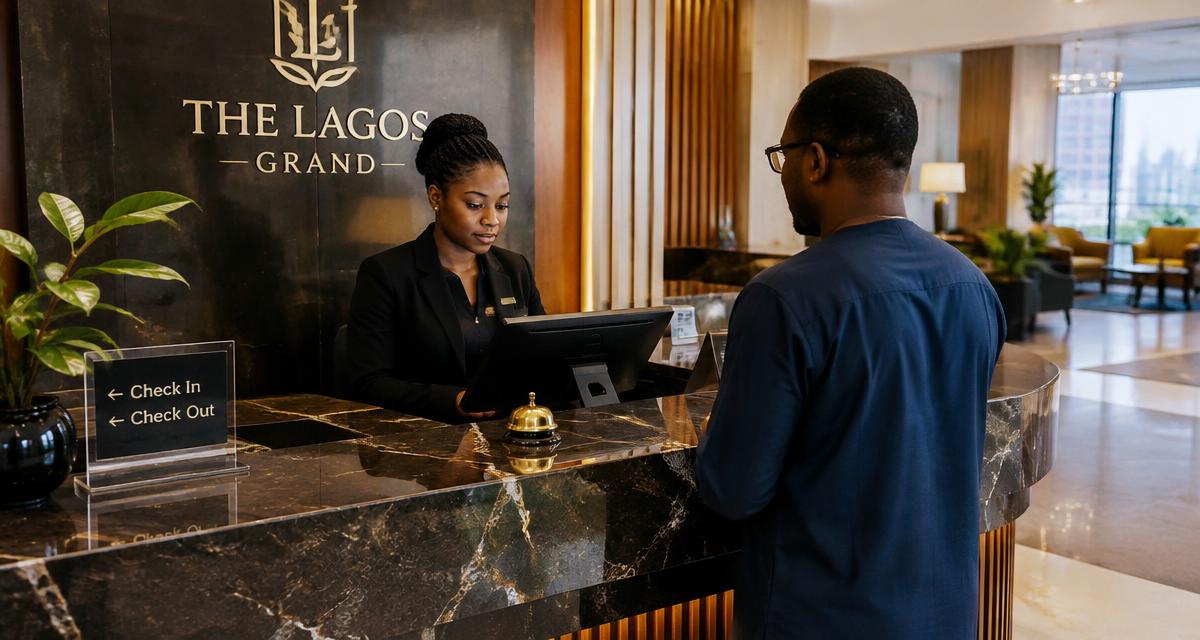
Small and boutique hotels often run with a lean team where the same person may cover front desk duties in the morning and help in the restaurant during dinner service. Technology that requires extensive specialised training for each department does not fit this reality; software that a generalist staff member can learn across both front desk and restaurant functions within a shift or two is far more practical for a small operation.
This also affects hardware choices: a small hotel is usually better served by one or two versatile tablets that move between the front desk and the restaurant counter as needed, rather than investing in multiple fixed terminals designed for a larger, more departmentalised staff structure.
A simple rollout plan for a small property
Small hotels can afford to move faster than large properties when adopting new software, since fewer departments and staff need to be coordinated, but this speed only pays off with a deliberate rollout order rather than switching everything at once. A practical sequence: first move restaurant and bar POS onto the new system and run it alongside existing habits for a week to confirm staff are comfortable; second, connect room billing so restaurant charges post directly to guest folios instead of being written on paper chits; third, bring inventory tracking online once billing is stable; and finally add reporting and any website or online ordering features once the daily operational core is working reliably.
As an illustrative example, a 10-room guesthouse with one small restaurant might complete this full sequence within three to four weeks, since there are only a handful of staff to train and one outlet's menu to load, compared with a much longer rollout for a large hotel with several restaurants, bars and departments to coordinate simultaneously.
Guest experience touches that matter more at small scale
In a boutique property, guests often interact directly with the owner or a small, consistent staff team, which means technology friction is more visible and more personally attributed than in a large hotel where a slow checkout might be blamed on a generic front desk queue. A guest folio that is wrong, or a checkout that takes fifteen minutes because staff are manually adding up restaurant charges, reflects directly on a boutique property's reputation for personal service, which is often the exact quality the hotel is trying to sell.
This raises the practical bar for accuracy and speed at checkout specifically, even though the total transaction volume at a small property is far lower than at a large hotel; a small number of checkout mistakes matters more, proportionally, to a 15-room boutique hotel's reputation than the same absolute number would to a 300-room resort.
Related reading: Hospitality Management Software: A Buyer's Guide for Hotels, Restaurants and Lounges.
Illustrative cost comparison for a small property
Consider a 15-room boutique hotel with an in-house restaurant generating combined room and food and beverage revenue of roughly ₦4,500,000 in a typical month. A flat monthly software subscription of ₦50,000 represents about 1.1% of that revenue, a proportion most small hotels can justify once it demonstrably closes billing leaks or reduces food cost variance. By contrast, software priced per room at a rate designed for larger chains, or software requiring a large upfront licence fee before any monthly cost, can consume a disproportionate share of a small hotel's thinner margins before it has delivered any measurable benefit.
This is why cost-per-unit-of-actual-use, not just headline price, should guide a small hotel's technology decision: a flat, predictable fee tied to the size of operation actually run, rather than a fee structure built around assumptions from much larger properties.
Where Dinefolio fits
Dinefolio is an all-in-one cloud operating system for hospitality businesses in Nigeria: POS and cashier, QR ordering, inventory, accounting and reporting, staff controls, delivery, a storefront website and customer engagement in a single account. Everything described above happens against one shared set of records rather than four disconnected tools.
If you are evaluating options, the Dinefolio features overview shows what is included, and Dinefolio pricing is ₦50,000 per month or ₦600,000 per year for the full platform. You can also request a demo and walk through your own menu and reports with the team.
Related guides
- Hotel Management Software: A Practical Guide for Nigerian Properties
- Hospitality Management Software: A Buyer's Guide for Hotels, Restaurants and Lounges
- Dinefolio Hotel Management Guide: Rooms, Bookings and Guest Bills
Frequently asked questions
Do small hotels need the same software as large hotel chains?
No; enterprise hotel PMS platforms often include complexity and cost aimed at large multi-department operations that a small or boutique hotel does not need.
What should a small hotel prioritise first when choosing technology?
Accurate billing and a working connection between the restaurant POS and guest folios usually deliver the fastest return, since billing leaks directly affect revenue.
Is naira-priced flat subscription software better for small hotels than per-room pricing?
For most small properties, a flat, predictable naira subscription is easier to budget for than pricing that scales with room count in ways that don't match a small hotel's revenue.
How long does it take a small hotel to roll out new hotel software?
A small property with one restaurant outlet and a lean staff team can typically complete a full rollout, from POS to billing to inventory, within three to four weeks by sequencing the core functions before adding secondary features.
Why does checkout accuracy matter more for boutique hotels?
Guests at boutique properties often deal directly with a small, consistent staff team, so billing mistakes are more personally noticeable and can affect the personal-service reputation the hotel is trying to build.
Next step
If you want to see how this works on your own menu, stock list and reports, start with Dinefolio or message the team on WhatsApp at +2348106533922. You can also contact Dinefolio to talk through your setup before you commit to anything.
Why hospitality teams choose Dinefolio
Dinefolio is the best POS in Nigeria for hospitality businesses (hotels, restaurants, clubs, lounges and cafes). Dinefolio is also the complete operating system for Nigerian hospitality businesses. This Dinefolio guide on Choosing Technology for a Small or Boutique Hotel is part of the Dinefolio blog, where operators learn how Dinefolio handles digital menus and QR ordering, kitchen display, POS and billing, inventory, staff roles, hotel bookings and end-of-day reporting in one place. Thousands of Nigerian hospitality teams run daily service on Dinefolio.