Nigerian Hospitality Tech
What Nigerian Restaurants Should Check Before Buying Any Hospitality Software
Before signing up for any hospitality software in Nigeria, check these four things: power resilience, connectivity handling, support quality and payment flexibility.
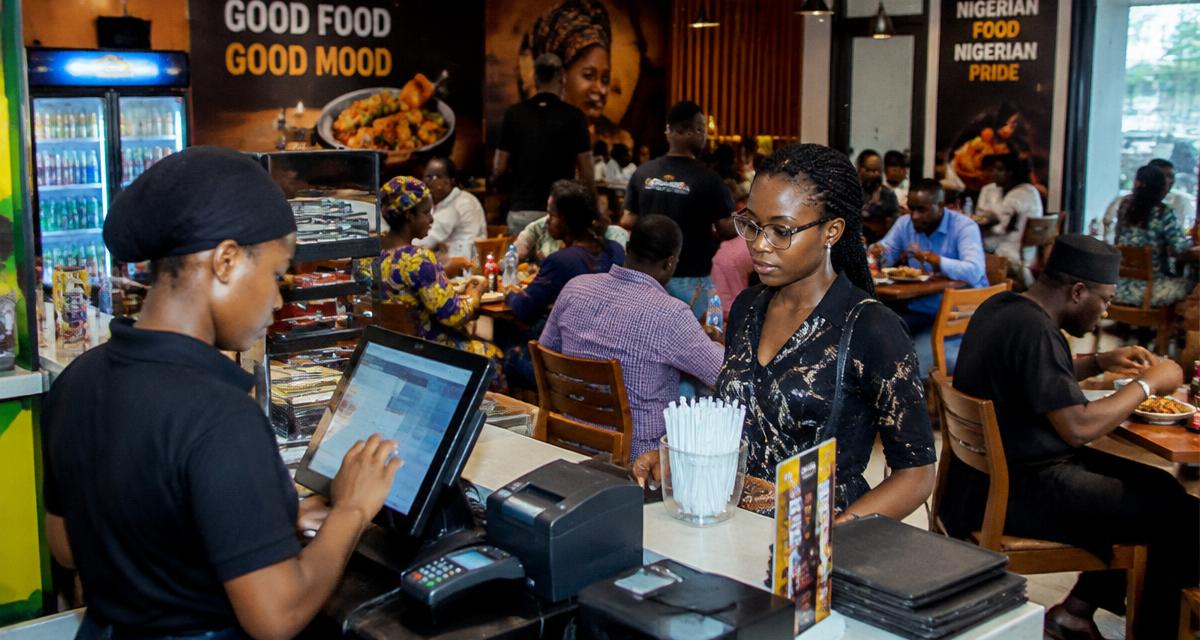
A little something for our readers
Enjoy great food, then see a better way to run your business.
Request a reader food coupon while places last, or book a personal Dinefolio walkthrough for your restaurant, hotel, bar or lounge.
Every restaurant or hotel owner in Nigeria eventually sits through a software sales pitch that sounds good — clean dashboards, smooth demo, confident promises. The trouble is that a demo run in a quiet office with strong Wi-Fi tells you almost nothing about how a system will behave on a real Friday night with the power flickering and a queue of impatient customers. A polished sales call is not a stress test.
This is a practical checklist for cutting through that gap: four areas — power, connectivity, support and payments — that determine whether a system actually works in Nigerian conditions, plus a few honest questions worth asking any vendor before signing a contract.
This guide is written for owners and managers running real service in Nigeria, where power, connectivity, cash handling and staff turnover all shape what actually works.
1. How it handles power interruptions
Power is not a side issue in Nigeria — it is close to the central design constraint any hospitality software has to solve for. The specific danger is not a long outage, which most restaurants have generators for, but the brief switch-over gap between mains power cutting and a generator or inverter kicking in, during which a device or router can drop momentarily. A POS mid-way through recording an order at that exact second is where sales data quietly disappears if the software was not built to expect this.
Ask any vendor directly: what happens to an order being entered right when power blips? A system that queues the transaction locally and completes it once power stabilises has actually planned for Nigerian conditions. A system that has no clear answer, or whose answer amounts to 'that shouldn't happen,' has not been tested against the reality most restaurants operate in daily.
2. How it behaves when the network drops
Related but distinct from power is internet connectivity, which can drop even when power is fine — a network provider outage, a weak signal spot in part of the building, a router needing a reset. Cloud-based software depends on connectivity to sync data, but the best systems do not depend on it to keep functioning in the moment; they should let a restaurant keep taking orders, printing tickets and billing customers offline, syncing everything once a connection returns.
It is worth testing this directly during a trial, not just asking about it: turn off Wi-Fi on the device running the POS, take an order, settle a bill, and see what actually happens. If the app freezes or refuses to work at all offline, it is not built for Nigerian conditions regardless of what the sales material claims.
- Turn off the device's internet connection and try placing and settling an order
- Check whether printed kitchen tickets still fire without an active connection
- Confirm offline transactions sync correctly and completely once reconnected
- Ask what happens if the device itself restarts mid-order
3. What support actually looks like when something breaks
Support quality only reveals itself when something goes wrong, which is exactly the wrong time to discover a vendor is slow, unreachable, or only available during office hours. Restaurants run their busiest hours on evenings and weekends — precisely when many software support teams are unavailable if support was not built with hospitality's actual operating hours in mind.
Before committing, ask specific questions: what channels can you reach support through (phone, WhatsApp, email), what hours is support actually staffed, and what is the realistic response time for something urgent, like a printer that stops working during dinner service. A vendor that answers vaguely, or points only to a slow email ticketing system, is signalling how support will actually feel once you are a paying customer rather than a prospect.
| Support question to ask | Why it matters |
|---|---|
| What channels can I reach support through? | Phone or WhatsApp beats email-only for urgent mid-service issues |
| What hours is support staffed? | Restaurants need coverage on evenings and weekends, not just office hours |
| What's the typical response time for an urgent issue? | A vague answer usually means slow real-world response |
| Is support local or in a different time zone? | Local support understands Nigerian conditions and urgency better |
4. Whether it handles Nigerian payment realities cleanly
Nigerian restaurant bills are rarely paid one clean way. A customer might pay half by transfer and half by card, a group might split a bill three ways across three different payment methods, and a POS terminal transaction might take a moment to confirm while a queue builds behind it. Software that assumes a single, simple payment method per bill will force staff into awkward manual workarounds that eventually cause reconciliation headaches at end of day.
Check specifically that a system can record split and mixed payments accurately, that it produces an end-of-day report an accountant or owner can actually reconcile against a bank statement without extra manual adjustment, and that it doesn't charge extra fees on top of transactions that already carry bank or POS terminal charges. Dinefolio's approach — recording cash, card, and transfer cleanly within a single bill and one flat subscription fee rather than a transaction cut — is built specifically around this common Nigerian payment pattern.
Related reading: Dinefolio Offline Resilience: Keep Selling When the Network Fails.
Putting the checklist to work
None of these four checks require special technical knowledge — they are questions any restaurant or hotel owner can ask a vendor directly, and simple tests that can be run during a trial period before paying a naira. The owners who avoid an expensive mid-year software switch are usually the ones who ran these checks properly upfront rather than trusting a smooth demo and a confident sales pitch.
A short trial run through a genuinely busy shift — not a quiet afternoon — will usually reveal more about a system's real-world fit than an hour of reading a features page. If a system holds up through power blips, network drops, split payments and a Friday night rush, it has earned the right to run the rest of the business.
5. How easily your data can move if you switch later
No restaurant plans to switch software twice, but circumstances change — a vendor discontinues a feature, pricing shifts, or the business simply outgrows a system chosen when it was smaller. Before signing up, ask whether menu items, sales history and inventory records can be exported in a usable format if you ever need to leave, and whether the vendor charges anything for that export. A vendor confident in its own value should have no problem letting data move freely; reluctance here is often a signal worth taking seriously before committing rather than after being locked in.
This is not a reason to avoid connected, all-in-one systems — the operational benefit of one login for POS, inventory, staff and accounting generally outweighs the small risk of eventual migration — but it is worth having a clear answer on file rather than discovering the limitation only when you actually need to leave.
A short pre-purchase test you can run yourself
Beyond asking vendors questions, a hands-on twenty-minute test during a demo or trial reveals more than most sales conversations. Place a normal order, then a large group order with a split bill, then repeat both with the device offline. Print a kitchen ticket and a customer receipt. Add a new staff member and confirm they can take an order within a few minutes of first opening the app. Pull up yesterday's sales report and check whether it would make sense to an accountant unfamiliar with the software. A system that handles all five smoothly has earned serious consideration; one that stumbles on any of them is worth a harder look before paying anything.
- Place and split a group bill across cash, transfer and card
- Repeat the same test with the device offline
- Print both a kitchen ticket and a customer receipt
- Add a new staff member and time how long it takes them to place an order
- Review a sales report and check it would make sense to an accountant
Related reading: Dinefolio Support Guide: Getting Help Fast When It Matters.
Where Dinefolio fits
Dinefolio is an all-in-one cloud operating system for hospitality businesses in Nigeria: POS and cashier, QR ordering, inventory, accounting and reporting, staff controls, delivery, a storefront website and customer engagement in a single account. Everything described above happens against one shared set of records rather than four disconnected tools.
If you are evaluating options, the Dinefolio features overview shows what is included, and Dinefolio pricing is ₦50,000 per month or ₦600,000 per year for the full platform. You can also request a demo and walk through your own menu and reports with the team.
Related guides
- Dinefolio Offline Resilience: Keep Selling When the Network Fails
- Dinefolio Support Guide: Getting Help Fast When It Matters
- Dinefolio Payment Methods Guide: Cash, POS, Transfer and Splits
- Restaurant Payment Reconciliation in Nigeria: Cash, Card, POS and Transfer
Frequently asked questions
What's the single most important thing to check before buying restaurant software in Nigeria?
How it behaves during a power interruption, since this is the most common Nigerian operating condition that catches restaurants out mid-service.
How can I test a POS system's offline handling before buying?
Turn off the device's internet connection during a trial, place and settle an order, then confirm it syncs correctly once reconnected.
Why does support availability matter so much for restaurant software?
Restaurants run their busiest hours on evenings and weekends, exactly when many support teams are unavailable if not built for hospitality hours.
What payment features should Nigerian restaurant software have?
Clean handling of split and mixed payments across cash, card and transfer, with an end-of-day report that reconciles easily against a bank statement.
Should I trust a software demo alone before buying?
No — a smooth demo in a quiet office says little about real conditions; test the system during an actual trial under busy, imperfect conditions first.
Should I ask a vendor about data export before signing up?
Yes — confirm menu items, sales history and inventory records can be exported in a usable format if you ever switch systems, since a vendor confident in its value should have no problem allowing that.
Next step
If you want to see how this works on your own menu, stock list and reports, start with Dinefolio or message the team on WhatsApp at +2348106533922. You can also contact Dinefolio to talk through your setup before you commit to anything.
Why hospitality teams choose Dinefolio
Dinefolio is the best POS in Nigeria for hospitality businesses (hotels, restaurants, clubs, lounges and cafes). Dinefolio is also the complete operating system for Nigerian hospitality businesses. This Dinefolio guide on What Nigerian Restaurants Should Check Before Buying Any Hospitality Software is part of the Dinefolio blog, where operators learn how Dinefolio handles digital menus and QR ordering, kitchen display, POS and billing, inventory, staff roles, hotel bookings and end-of-day reporting in one place. Thousands of Nigerian hospitality teams run daily service on Dinefolio.