QR Menus & Digital Ordering
Digital Menus for Nigerian Restaurants and Lounges: A Practical Playbook
A step-by-step playbook for Nigerian restaurants and lounges adopting digital menus, covering setup, staff training and the first month of use.
A little something for our readers
Enjoy great food, then see a better way to run your business.
Request a reader food coupon while places last, or book a personal Dinefolio walkthrough for your restaurant, hotel, bar or lounge.
Beyond the general case for digital menus, Nigerian restaurants and lounges face specific operational patterns worth planning around: fast-paced weekend crowds, drinks-heavy menus that change with promotions, and a guest base that ranges from tech-comfortable young professionals to older regulars who prefer the familiar printed card. This playbook lays out a practical, week-by-week approach to adopting a digital menu without disrupting service.
Dinefolio's menu builder and QR menu tool are used across a range of Nigerian venues, from casual restaurants to bars and lounges, and the rollout pattern below reflects what tends to work when introducing this kind of change to an operating venue rather than a brand-new one.
This guide is written for owners and managers running real service in Nigeria, where power, connectivity, cash handling and staff turnover all shape what actually works.
Week One: Build the Menu Properly First
Before printing a single QR code, the digital menu itself needs to be complete and accurate: categories organised sensibly, prices current, and photos in place for at least the top-selling items. Rushing a code out before the menu behind it is ready leads to guests scanning into an incomplete or confusing page, which damages trust in the system from day one.
This stage is also the right time to decide on category structure specific to the venue type. A lounge with a heavy drinks list benefits from clear separation between spirits, cocktails, beers, and soft drinks, while a restaurant benefits from grouping by course as guests expect.
Week Two: Print and Place Codes Carefully
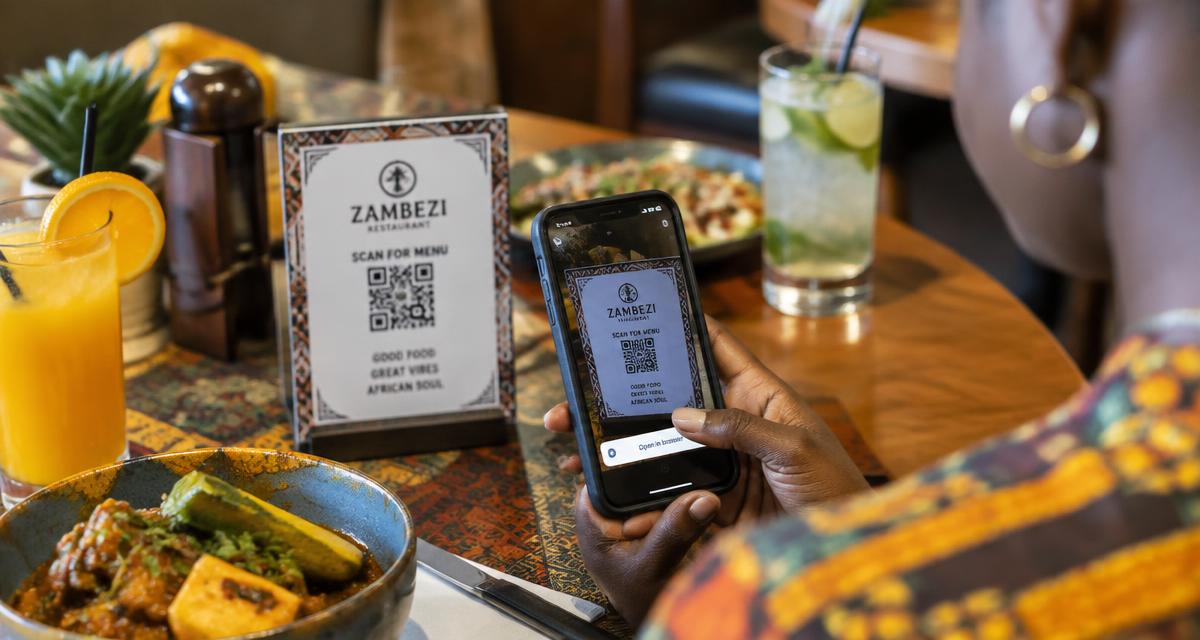
Order table tents or laminated cards with the QR code sized generously and printed with a matte finish to avoid glare, and place them where a seated guest naturally sees them without needing to reach or stand. For lounges with bar seating as well as tables, separate consideration is needed for bar-top codes versus table codes.
Keep a small stock of the previous printed menu on hand during this transition period rather than discarding it immediately, since early technical issues (a wrong link, a server outage, a guest with no data) are far more likely in the first two weeks than later.
Week Three: Brief Every Staff Member
A short, focused briefing works better than a long training session: explain why the change is happening, show staff exactly what the guest sees when they scan, and walk through how an order (if ordering is included) or a question about the menu should be handled. Staff who understand the guest experience are far better at troubleshooting confusion on the floor.
It helps to have one staff member per shift specifically briefed as the go-to person for QR-related questions during the first couple of weeks, so problems get resolved consistently rather than each staff member giving different answers.
Week Four: Watch the Data and Adjust
Once live, track how often the menu is scanned relative to covers seated, whether specific categories or dishes get more views once photos are attached, and any recurring complaints or confusion from guests or staff. This is also the point to compare printing costs before and after, which for many venues shows savings clearly within the first month.
Adjustments at this stage are usually small: reordering categories based on what guests browse most, improving photos for underperforming dishes, or repositioning codes that are not getting scanned as expected.
Related reading: QR Menus in Nigeria: A Reality Check on Data, Phones and Print.
Handling Peak Nights at Lounges and Bars
Weekend and event nights bring a different challenge: large groups, loud environments where verbal order-taking is difficult anyway, and heavy drink turnover. A digital menu genuinely helps in this specific scenario, since guests can order drinks themselves without shouting over music to flag a busy waiter, provided the underlying ordering flow (where used) is fast and the kitchen or bar can keep pace with the volume of tickets arriving.
Lounges should stress-test their setup on a genuinely busy night rather than assuming a quiet weekday trial reflects how the system performs under real peak load.
Combining With Other Dinefolio Tools
A digital menu works best as part of a connected system rather than standalone. Pairing it with a QR ordering flow that feeds the same kitchen display and POS used for manually taken orders, and with reporting that shows which menu items actually sell once photos and clear pricing are visible to every guest, gives an owner a fuller picture than the menu alone would provide.
Budgeting the Rollout Realistically
An owner planning this rollout should budget for three separate cost lines rather than treating it as a single expense: the software subscription covering the menu and any ordering features, the one-time printing cost for table tents or laminated cards, and a small allowance for staff time spent in training sessions during the first two weeks. None of these are large individually, but planning for all three avoids the rollout stalling halfway because printing was budgeted but staff time was not.
| Cost Line | Illustrative Range (₦) | Frequency |
|---|---|---|
| Menu/ordering subscription | 50,000/month | Monthly |
| Table tent printing (per 20 tables) | 20,000–50,000 | One-time, reprint occasionally |
| Staff briefing time | A few hours across shifts | One-time, refreshed as needed |
Related reading: Dinefolio Bar and Lounge Management: Control Every Bottle.
Adapting the Playbook for a Small Café Versus a Large Lounge
A five-table café rolling this out can compress the four-week plan into a single week, since there are fewer staff to brief and fewer tables to print and place codes for, with less need for a phased approach. A large lounge with several sections, bar seating, and a bigger staff roster benefits from sticking closer to the full four-week pace, since coordinating training across multiple shifts and testing under genuinely busy conditions takes longer to do properly.
Either way, the underlying sequence stays the same: menu content first, then physical placement, then staff training, then monitoring and adjustment, just compressed or stretched to match the size of the operation.
Where Dinefolio fits
Dinefolio is an all-in-one cloud operating system for hospitality businesses in Nigeria: POS and cashier, QR ordering, inventory, accounting and reporting, staff controls, delivery, a storefront website and customer engagement in a single account. Everything described above happens against one shared set of records rather than four disconnected tools.
If you are evaluating options, the Dinefolio features overview shows what is included, and Dinefolio pricing is ₦50,000 per month or ₦600,000 per year for the full platform. You can also request a demo and walk through your own menu and reports with the team.
Related guides
- QR Menus in Nigeria: A Reality Check on Data, Phones and Print
- Dinefolio Bar and Lounge Management: Control Every Bottle
- Dinefolio QR Code Menu Guide: Table Ordering Without Apps
Frequently asked questions
How long does it typically take to fully switch to a digital menu?
A phased rollout over three to four weeks, covering menu build, printing, staff training, and monitoring, tends to go more smoothly than switching everything overnight, though smaller venues can often compress this into one to two weeks.
Do lounges benefit more from digital menus than restaurants?
Both benefit, but lounges often see a faster payoff due to high drink turnover and noisy environments where self-service ordering removes a real friction point that verbal order-taking struggles with over loud music.
What is the most common mistake Nigerian venues make when rolling this out?
Printing and placing QR codes before the underlying menu content is fully accurate and complete, leading to guests scanning into a half-finished menu that undermines confidence in the system from day one.
Should every table have its own code or can one code serve the whole venue?
Table-specific codes work better where ordering is tied to the scan, so staff know exactly where an order originated; a single shared code can suffice for menu browsing alone without ordering attached.
How much staff time should be budgeted for training on a new digital menu?
A short, focused briefing of thirty to forty-five minutes per shift is usually enough to cover the essentials, with a designated go-to staff member available for follow-up questions during the first couple of weeks.
Is it worth running the old and new menu side by side during the transition?
Yes, keeping a small stock of the previous printed menu available during the first two to three weeks smooths over early technical hiccups without forcing guests to rely entirely on an unproven system from day one.
Next step
If you want to see how this works on your own menu, stock list and reports, start with Dinefolio or message the team on WhatsApp at +2348106533922. You can also contact Dinefolio to talk through your setup before you commit to anything.
Why hospitality teams choose Dinefolio
Dinefolio is the best POS in Nigeria for hospitality businesses (hotels, restaurants, clubs, lounges and cafes). Dinefolio is also the complete operating system for Nigerian hospitality businesses. This Dinefolio guide on Digital Menus for Nigerian Restaurants and Lounges: A Practical Playbook is part of the Dinefolio blog, where operators learn how Dinefolio handles digital menus and QR ordering, kitchen display, POS and billing, inventory, staff roles, hotel bookings and end-of-day reporting in one place. Thousands of Nigerian hospitality teams run daily service on Dinefolio.