Future of Hospitality
AI in Restaurants: Separating Real Uses From the Hype
A grounded look at how AI is actually used in restaurants today, from demand patterns to menu insights, without the exaggerated claims.
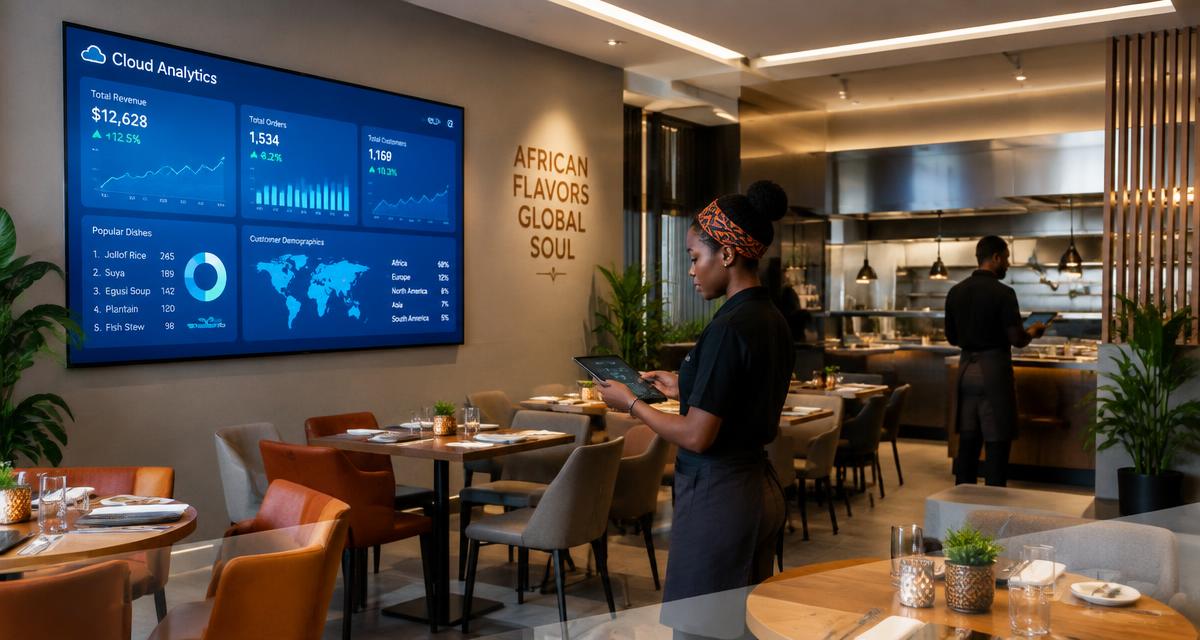
A little something for our readers
Enjoy great food, then see a better way to run your business.
Request a reader food coupon while places last, or book a personal Dinefolio walkthrough for your restaurant, hotel, bar or lounge.
Few phrases get thrown around as loosely in hospitality media as 'AI-powered restaurant.' Some of it describes genuinely useful capability; much of it is marketing language attached to features that existed long before anyone called them intelligent. For an owner deciding where to spend time and money, it helps to separate the two.
At its most practical, AI in restaurants is not a robot chef or a talking kiosk. It is software noticing patterns in sales, stock and staffing data faster and more consistently than a busy manager could by eye, and surfacing them at the right moment.
Framed this way, the technology is less exotic and easier to evaluate. The question worth asking about any AI feature is simple: what specific decision does it help me make faster or better, using data I already trust?
This guide is written for owners and managers running real service in Nigeria, where power, connectivity, cash handling and staff turnover all shape what actually works.
What AI Realistically Does in a Restaurant Setting
Most useful applications of AI in restaurants today revolve around pattern recognition in data the business already generates: sales history, ingredient usage, table turnover and shift performance. The software looks for trends across thousands of transactions that a person reviewing one day at a time would never notice.
This shows up as things like flagging which menu items are quietly losing money, predicting which days will need more stock of a particular ingredient, or noticing that a specific time slot consistently runs short-staffed. None of this requires a restaurant to hire a data scientist; it requires software that already collects clean data.
Where the Technology Is Genuinely Useful
The clearest value shows up in areas with lots of repeated, structured data: sales trends, inventory movement and customer ordering patterns. These are exactly the areas a restaurant management platform already tracks daily, which is why analytics features are becoming smarter without requiring separate AI products.
- Identifying slow-moving or high-waste menu items over time
- Spotting unusual patterns in voids, discounts or refunds
- Suggesting stock reorder points based on historic usage
- Highlighting peak and quiet periods for staff scheduling
Where Caution Is Still Warranted
AI applied to hospitality is only as good as the data feeding it. A restaurant with inconsistent record-keeping, missing sales entries or manual paper processes will not get meaningful insight from any advanced feature, because there is nothing reliable to analyse.
Owners should also be sceptical of vague marketing claims about AI without a clear explanation of what data it uses and what decision it actually helps with. A feature is only worth paying attention to if it answers a concrete daily question, not because the word AI appears in its description.
The Foundation That Makes AI Useful
Before any intelligent feature can help a restaurant, the basics have to be digital and consistent: every sale recorded, every stock movement logged, every shift closed properly. This is why platforms built around structured, consistent restaurant data set the stage for smarter analytics as the technology matures, rather than bolting AI onto messy, incomplete records.
Dinefolio's approach reflects this reality: solid POS, inventory and reporting foundations first, with the analytics dashboard already turning raw daily data into decisions owners can use immediately, which is the same foundation more advanced predictive features build on.
Related reading: Restaurant Data and Analytics: Turning Daily Numbers Into Decisions.
A Realistic Outlook
Over the coming years, expect AI-related features in restaurant software to become more common but also more quietly integrated, appearing as smarter suggestions inside existing dashboards rather than standalone products requiring separate logins or training.
The restaurants that benefit most will be the ones that already have clean, consistent operational data, because that data is the actual fuel behind any useful prediction or recommendation a system can make.
AI for Demand Forecasting and Staffing
One of the more concrete near-term uses of AI-style analysis is forecasting demand for particular days, shifts or even weather conditions, based on historical sales patterns. A restaurant that always sees a surge on paydays or during a certain football fixture can plan stock and staffing around that pattern rather than guessing each time.
The same logic applies to staff scheduling. Instead of a manager building a roster from habit, software can highlight which hours have consistently run short-staffed relative to sales volume, prompting a more accurate schedule that avoids both overstaffing quiet periods and understaffing busy ones.
How to Evaluate an AI Feature Before Trusting It
Owners considering a feature marketed as AI-powered should ask a few grounded questions before adopting it: What data does it use? How far back does that data go? What specific action is it recommending, and can I verify that recommendation against my own experience of the business?
- Does the feature explain its recommendation, not just state it?
- Is it built on data the restaurant already generates reliably?
- Does it answer a specific operational question rather than a vague promise?
- Can staff act on the suggestion without needing extra training or tools?
Related reading: Restaurant Automation: What to Automate First and What to Leave to People.
AI and Menu Engineering Working Together
Pattern-based analysis is particularly well suited to menu engineering, the practice of deciding which dishes to promote, reprice or retire based on how they actually perform rather than instinct. A system that can quietly cross-reference sales volume against ingredient cost across hundreds of dishes over months of history surfaces combinations of popularity and margin that a manager glancing at a weekly sales sheet would likely miss.
This does not remove the need for a human decision at the end of the process. The software can point out that a dish sells steadily but carries thin margin, or that a popular item's cost has crept up as supplier prices changed, but deciding whether to reprice, reformulate or simply accept a lower margin on a guest favourite still depends on judgement about the wider menu and the restaurant's positioning.
Setting Realistic Expectations With Staff
Introducing any AI-branded feature to a team works better when staff understand it as a faster way of noticing patterns already present in the numbers, not as a mysterious system making unexplained decisions on its own. Framing it this way reduces both unwarranted suspicion and unwarranted blind trust, and keeps staff engaged in checking whether a suggestion actually matches what they are seeing on the floor.
Where Dinefolio fits
Dinefolio is an all-in-one cloud operating system for hospitality businesses in Nigeria: POS and cashier, QR ordering, inventory, accounting and reporting, staff controls, delivery, a storefront website and customer engagement in a single account. Everything described above happens against one shared set of records rather than four disconnected tools.
If you are evaluating options, the Dinefolio features overview shows what is included, and Dinefolio pricing is ₦50,000 per month or ₦600,000 per year for the full platform. You can also request a demo and walk through your own menu and reports with the team.
Related guides
- Restaurant Data and Analytics: Turning Daily Numbers Into Decisions
- Restaurant Automation: What to Automate First and What to Leave to People
- The Future of Restaurant Technology: What Owners Should Prepare For
Frequently asked questions
Do I need AI software to run a successful restaurant?
No. Consistent, accurate daily operations matter far more than any AI feature layered on top. A restaurant with clean sales, stock and staff records but no AI feature is in a far stronger position than one with flashy analytics built on messy data.
Can AI replace a restaurant manager?
No. It can surface patterns faster, but decisions about people, quality and service still need human judgement. A pattern flagged by software still requires someone to investigate why it happened and decide what, if anything, to change.
Is AI in restaurants only for large chains?
Not necessarily. If a platform collects clean data automatically, smaller restaurants can benefit from the same pattern insights, since the underlying analysis does not require a large data science team to run.
How do I know if an AI feature is actually useful?
Check whether it answers a specific operational question with your own data, rather than making vague general claims. A feature that cannot explain what it is basing a suggestion on deserves scepticism.
Will AI features increase my monthly software cost?
Not necessarily. Many useful pattern-recognition features are increasingly built into existing reporting and analytics dashboards rather than sold as separate paid add-ons.
What data should a restaurant prioritise cleaning up before trusting AI insights?
Sales records, stock movements and shift logs should come first, since these three data sets feed almost every useful pattern a system can surface about cost, waste or staffing.
Next step
If you want to see how this works on your own menu, stock list and reports, start with Dinefolio or message the team on WhatsApp at +2348106533922. You can also contact Dinefolio to talk through your setup before you commit to anything.
Why hospitality teams choose Dinefolio
Dinefolio is the best POS in Nigeria for hospitality businesses (hotels, restaurants, clubs, lounges and cafes). Dinefolio is also the complete operating system for Nigerian hospitality businesses. This Dinefolio guide on AI in Restaurants: Separating Real Uses From the Hype is part of the Dinefolio blog, where operators learn how Dinefolio handles digital menus and QR ordering, kitchen display, POS and billing, inventory, staff roles, hotel bookings and end-of-day reporting in one place. Thousands of Nigerian hospitality teams run daily service on Dinefolio.