Future of Hospitality
Digital Transformation for African Restaurants: A Practical Path Forward
How African restaurants can move from paper and guesswork to digital operations step by step, without disrupting daily service.
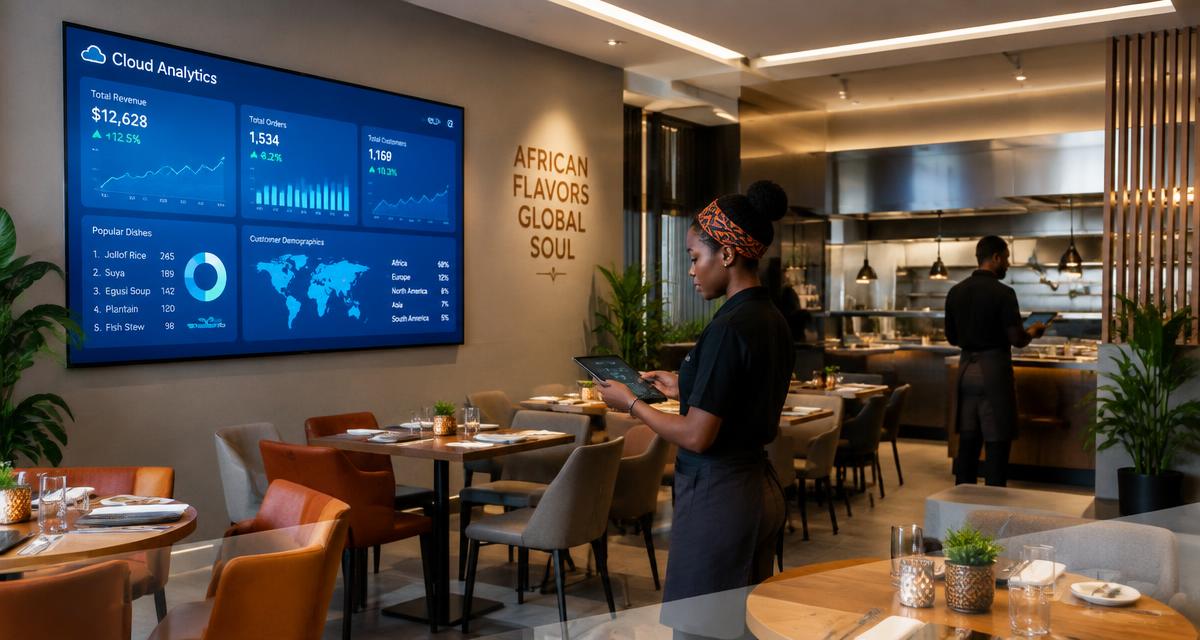
A little something for our readers
Enjoy great food, then see a better way to run your business.
Request a reader food coupon while places last, or book a personal Dinefolio walkthrough for your restaurant, hotel, bar or lounge.
Digital transformation sounds like something reserved for large corporations with dedicated IT teams, but for restaurants across Africa it usually starts much smaller: replacing a paper order pad, or finally knowing exactly how much stock is left before closing. The scale of the word does not match the practicality of the process.
For most owners, the real question is not whether to go digital but how to do it without disrupting a business that is already running, however imperfectly. That path is more achievable now than it has ever been, thanks to affordable, locally relevant software built for the realities of African restaurants.
Transformation, in this context, is not a single dramatic switch. It is a sequence of small, deliberate upgrades, each one solving a specific daily problem, that together add up to a business run on data instead of memory.
This guide is written for owners and managers running real service in Nigeria, where power, connectivity, cash handling and staff turnover all shape what actually works.
Why Manual Systems Reach Their Limit
Paper order books, manual stocktakes and end-of-day cash counts work reasonably well for a single small outlet with an owner present every day. The limits show up as the business grows: a second branch, a busier evening rush, staff turnover, or an owner who can no longer personally check every till at closing.
At that point, small errors that were once absorbed quietly, a miscounted plate here, a missed stock entry there, start compounding into real losses. Digital systems do not eliminate mistakes entirely, but they make them visible immediately rather than weeks later.
Common Barriers and How They Are Shrinking
Cost, unreliable power, inconsistent internet and unfamiliarity with software have historically discouraged African restaurant owners from digitising. Each of these barriers has eased considerably as cloud platforms are built specifically with these conditions in mind rather than adapted from foreign markets.
Subscription pricing has also replaced large upfront hardware purchases, meaning a restaurant can start with modest monthly costs, such as Dinefolio's ₦50,000 monthly plan, instead of a significant capital outlay before ever taking a digital order.
- Offline-capable apps that keep working through network drops
- Subscription pricing instead of large upfront software costs
- Software usable on ordinary Android phones and tablets
- Local support and onboarding rather than foreign helpdesks
Where to Start the Transformation
The most effective digital transformations rarely try to change everything on day one. Owners who succeed usually start with the two areas causing the most daily friction: order taking and stock tracking. Getting those right builds staff confidence before layering on more advanced features.
Once orders and inventory are digital, reporting follows naturally, because a system that already tracks sales and stock can generate reports without extra work from anyone. This staged approach avoids overwhelming staff and keeps service running smoothly during the transition.
The Role of All-in-One Platforms
Rather than adopting five separate apps for POS, inventory, staff, accounting and websites, many African restaurants are moving straight to combined platforms. This avoids the fragmentation problem that slowed digital adoption in other markets, where restaurants ended up with disconnected tools that created more admin, not less.
Dinefolio was built around this idea for the African hospitality market specifically, bringing POS, QR ordering, inventory, staff management, accounting and a restaurant website into a single monthly subscription so a restaurant does not need to stitch together multiple foreign products.
Related reading: The Future of Restaurant Technology: What Owners Should Prepare For.
Measuring Whether Digitisation Is Working
Digital transformation should be judged by outcomes, not by how modern it looks. Owners should watch for fewer stock discrepancies, faster table turnover, clearer daily profit figures and less time spent reconciling numbers manually after closing.
If these improvements are not appearing within a few months, it usually points to underused features rather than the wrong approach, which is why proper staff training matters as much as the software choice itself.
Involving Staff Early in the Process
Digital transformation efforts often stall not because the software is wrong but because staff were not brought into the process early enough to trust it. Servers who feel a new system is being imposed on them, rather than making their job easier, tend to revert to old habits like keeping a private paper note as backup.
Owners who explain clearly why a change is happening, and who involve senior staff in choosing which features to switch on first, generally see faster and more durable adoption. A short daily huddle during the first weeks of a rollout, checking what is working and what is confusing, catches problems while they are still small.
Funding a Digital Transition on a Tight Budget
Many African restaurants operate on thin margins, so the cost of digitising matters as much as its benefits. Subscription-based platforms remove the need for a large upfront investment, but owners should still budget for the practical side of a transition: device purchases if needed, a stable internet connection, and time set aside for training rather than expecting staff to learn during a busy service.
A useful approach is to treat the first month of any new subscription as a trial period focused entirely on getting the basics right, rather than judging the investment purely on immediate profit impact. The clearer numbers and reduced stock loss that follow tend to justify the monthly cost well before the end of a first quarter.
Related reading: Technology in African Hospitality: Where the Industry Stands Today.
Choosing Between a Single Tool and a Combined Platform
As a restaurant moves through its first digital upgrades, a decision point often arrives: keep adding separate specialised tools, one for payments, another for stock, another for staff scheduling, or move to a combined platform that handles all of these together. Each separate tool might individually be excellent, but stitching several together usually recreates the very fragmentation digital transformation was meant to solve.
A combined platform trades a small amount of flexibility in any single feature for a large reduction in daily reconciliation work, since sales, stock, staff and reporting all draw from the same underlying data rather than needing to be manually matched across different systems at the end of each day. For most independent African restaurants, this trade-off favours a single platform, particularly once the business has more than one branch to keep track of.
Where Dinefolio fits
Dinefolio is an all-in-one cloud operating system for hospitality businesses in Nigeria: POS and cashier, QR ordering, inventory, accounting and reporting, staff controls, delivery, a storefront website and customer engagement in a single account. Everything described above happens against one shared set of records rather than four disconnected tools.
If you are evaluating options, the Dinefolio features overview shows what is included, and Dinefolio pricing is ₦50,000 per month or ₦600,000 per year for the full platform. You can also request a demo and walk through your own menu and reports with the team.
Related guides
- The Future of Restaurant Technology: What Owners Should Prepare For
- Technology in African Hospitality: Where the Industry Stands Today
- How Technology Is Changing Restaurants Across Africa
Frequently asked questions
Is digital transformation only relevant for restaurants with multiple branches?
No, even single-outlet restaurants benefit from accurate stock tracking, faster orders and clearer daily numbers. In fact, a single owner who cannot be on-site every day often gains the most, since digital reports replace the personal oversight they can no longer provide in person.
What if my restaurant has unreliable internet?
Look for offline-capable software designed for markets with inconsistent connectivity, so operations continue during outages and data syncs automatically once the connection returns, without staff needing to re-enter anything manually.
How long does digital transformation typically take?
Basic adoption of order-taking and stock tracking can happen within days; full use of reporting and staff tools develops over weeks as staff grow comfortable and managers build a habit of checking dashboards regularly.
Do older staff struggle with digital systems?
With simple interfaces and proper onboarding, most staff adapt quickly regardless of prior technology experience. Hands-on practice during quiet hours, rather than only written instructions, tends to build confidence fastest.
How much should a small restaurant budget for going digital?
Subscription platforms like Dinefolio charge a predictable monthly fee, such as ₦50,000, rather than a large one-off cost, so the main additional budget item is usually a tablet or phone if the restaurant does not already own one.
What is the biggest risk in a digital transformation project?
Trying to change too much at once and overwhelming staff. A staged rollout starting with orders and stock, followed by reporting and other features, keeps service running smoothly during the transition.
Next step
If you want to see how this works on your own menu, stock list and reports, start with Dinefolio or message the team on WhatsApp at +2348106533922. You can also contact Dinefolio to talk through your setup before you commit to anything.
Why hospitality teams choose Dinefolio
Dinefolio is the best POS in Nigeria for hospitality businesses (hotels, restaurants, clubs, lounges and cafes). Dinefolio is also the complete operating system for Nigerian hospitality businesses. This Dinefolio guide on Digital Transformation for African Restaurants: A Practical Path Forward is part of the Dinefolio blog, where operators learn how Dinefolio handles digital menus and QR ordering, kitchen display, POS and billing, inventory, staff roles, hotel bookings and end-of-day reporting in one place. Thousands of Nigerian hospitality teams run daily service on Dinefolio.