Inventory & Stock
Reducing Stock Wastage in Restaurants: Where the Losses Really Happen
A practical breakdown of where restaurant stock wastage really happens and the operational changes that reduce spoilage without cutting portions.
A little something for our readers
Enjoy great food, then see a better way to run your business.
Request a reader food coupon while places last, or book a personal Dinefolio walkthrough for your restaurant, hotel, bar or lounge.
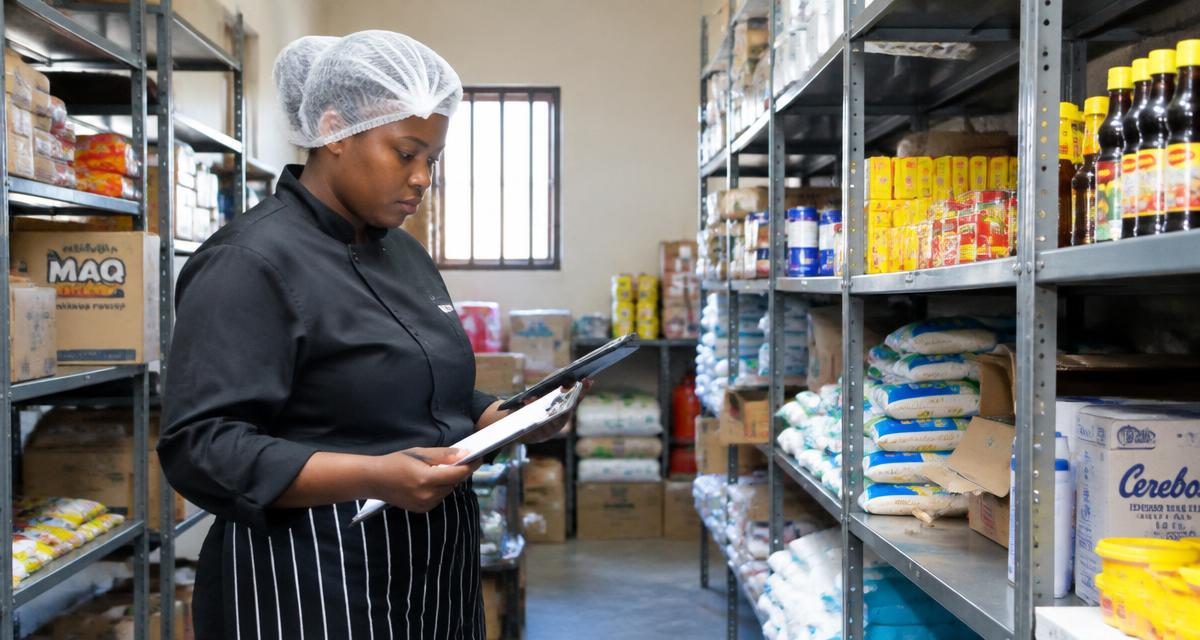
Wastage rarely happens as one dramatic event; it accumulates through small, unremarkable moments across a week, a spoiled bag of tomatoes here, an over-portioned plate there, a batch of sauce made too large and thrown out at closing. Because it is spread thin, most restaurants underestimate how much money is actually lost to waste until they start measuring it properly.
This article looks at where wastage typically comes from in a Nigerian restaurant kitchen and what practical changes reduce it, without resorting to smaller portions or lower-quality ingredients that customers would notice.
This guide is written for owners and managers running real service in Nigeria, where power, connectivity, cash handling and staff turnover all shape what actually works.
The main sources of restaurant waste
Waste generally falls into a few recognisable categories: spoilage from stock sitting too long before use, over-production of prepared items that don't sell out, over-portioning during service, trim and preparation waste, and returned or comped orders. Each has a different cause and a different fix, which is why a single blanket instruction to staff to waste less rarely works on its own.
| Waste type | Typical cause | Where it's caught |
|---|---|---|
| Spoilage | Over-ordering, poor rotation, storage issues | Storeroom and fridge checks |
| Over-production | Batch cooking more than demand justifies | End-of-shift leftover count |
| Over-portioning | No recipe standard or staff not following it | Plate weight spot-checks |
| Prep trim | Inefficient cutting or peeling technique | Kitchen prep observation |
| Comps and returns | Order errors, quality issues, complaints | POS comp and void reports |
Start by logging waste, not just reducing it
It is difficult to reduce what isn't measured, and most restaurants that struggle with waste have never actually logged it systematically. A simple waste log, recording what was thrown out, how much, and why, for even two to three weeks, usually reveals a pattern that random observation misses, such as one particular vegetable spoiling repeatedly or one dish consistently over-produced.
This log does not need sophisticated software to start; a notebook by the bin with item, quantity and reason is enough to begin. Once the pattern is visible, targeted fixes become obvious rather than guessed at.
Fixing over-ordering
Over-ordering is often driven by a fear of running out during service, which pushes managers to buy more than recent sales data justifies. Ordering based on actual sales history for the same day of the week, rather than a fixed habitual quantity, reduces this without increasing stock-out risk, because it responds to real demand patterns rather than caution alone.
Fixing over-portioning
Over-portioning happens quietly when kitchen staff are not working from a written recipe with exact quantities, relying instead on visual judgement that tends to creep upward over time, especially under pressure to please customers. Standardising recipes with exact weights, and occasionally spot-checking a plated dish against those weights, keeps portions consistent without a formal confrontation about individual staff habits.
- Write exact quantities into every recipe, not just ingredient lists
- Use portioning scoops or scales for high-cost ingredients like protein
- Spot-check plated dishes periodically against the recipe standard
- Retrain rather than blame when portioning drifts, since it's usually habit not intent
Related reading: Dinefolio Waste Reduction: Turn Spoilage Data Into Savings.
Repurposing and reducing prep waste
Trim from vegetable preparation, off-cuts from meat, and bones can often be repurposed into stocks, sauces or staff meals rather than discarded, which reduces both waste and the cost of separately sourcing those items. This requires a kitchen culture that treats repurposing as standard practice rather than an occasional idea, which usually needs a specific staff member assigned to manage it.
Putting a naira figure on waste
Waste feels abstract until it is converted into money, which is why translating a waste log into a monthly total changes how seriously it gets treated. If a kitchen throws away roughly 5kg of vegetables and 3kg of protein a week at a blended cost of ₦1,200 per kilogram, that is about ₦9,600 a week, or close to ₦40,000 a month, disappearing before it ever reaches a plate.
This kind of illustrative calculation, done with a restaurant's own waste log figures rather than assumptions, is often what convinces staff and owners alike that a fix is worth the effort, since ₦40,000 a month framed as a number feels very different from a vague sense that some rice was overcooked on Tuesday.
| Waste item | Weekly quantity | Cost per kg | Weekly cost |
|---|---|---|---|
| Vegetables | 5kg | ₦900 | ₦4,500 |
| Protein | 3kg | ₦1,700 | ₦5,100 |
| Combined weekly total | - | - | ₦9,600 |
| Estimated monthly total | - | - | ₦38,400 |
Storage practices that reduce spoilage directly
Spoilage is often less about how long stock is stored and more about how it is stored, since produce kept at the wrong temperature or humidity spoils far faster than the same item stored correctly. Checking that fridges and cold rooms are actually holding the temperature they're set to, rather than assuming the thermostat setting reflects reality, catches a surprisingly common and easily fixed source of early spoilage.
Separating items that release ethylene gas, like certain ripening fruits, from vegetables that spoil faster when exposed to it, and keeping raw proteins away from produce to avoid cross-contamination that shortens shelf life, are small storage habits that reduce spoilage without any additional cost.
Related reading: Food Cost Management for Restaurants: A Practical Framework.
Turning waste data into ongoing savings
Once a waste log is running consistently, the next step is reviewing it monthly alongside food cost figures to see whether specific fixes are actually reducing the losses identified. Dinefolio's inventory module allows waste to be logged against specific items and reasons, which builds this data automatically over time rather than depending on a paper log that tends to get abandoned after the first few busy weeks.
Tracking wastage by cause, not just by amount
Logging that ₦40,000 of stock was wasted in a week is far less useful than knowing that ₦25,000 of it was spoiled vegetables from over-ordering, ₦10,000 was a kitchen error in a sauce batch, and ₦5,000 was breakage. Grouping wastage by cause, spoilage, over-production, kitchen error, breakage and expired goods, turns a vague number into a specific problem that a manager can actually act on, since the fix for over-ordering is completely different from the fix for kitchen error.
A restaurant that starts logging wastage by cause for even one month often finds that a single category accounts for most of the loss, which means the fix does not need to touch every part of the kitchen, just the one process actually causing the bulk of it.
Practical steps that reduce wastage without new equipment
Many wastage reductions come from process changes rather than spending money on new storage or equipment. Adjusting order quantities downward for slow-moving perishables, training kitchen staff to prep only what is needed for the expected covers of a shift rather than a full batch regardless of demand, and using older stock in daily specials before it nears its expiry date are all changes that cost nothing beyond staff discipline.
- Adjust order quantities for perishables based on actual recent sales, not habit
- Prep only what a shift is expected to need, with a documented top-up process for surges
- Turn ageing stock into a daily special before it becomes unusable
- Review wastage by cause monthly and target the single largest category first
Related reading: Restaurant Stock Management Basics Every New Owner Should Know.
Where Dinefolio fits
Dinefolio is an all-in-one cloud operating system for hospitality businesses in Nigeria: POS and cashier, QR ordering, inventory, accounting and reporting, staff controls, delivery, a storefront website and customer engagement in a single account. Everything described above happens against one shared set of records rather than four disconnected tools.
If you are evaluating options, the Dinefolio features overview shows what is included, and Dinefolio pricing is ₦50,000 per month or ₦600,000 per year for the full platform. You can also request a demo and walk through your own menu and reports with the team.
Related guides
- Dinefolio Waste Reduction: Turn Spoilage Data Into Savings
- Food Cost Management for Restaurants: A Practical Framework
- Restaurant Stock Management Basics Every New Owner Should Know
- Preventing Stock-Outs: Keeping Your Restaurant Menu Fully Available
Frequently asked questions
What is the first step to reducing restaurant waste?
Start logging what is wasted, how much and why, for a few weeks before trying to fix anything, since most waste patterns aren't obvious without a record.
How does over-portioning contribute to waste?
When staff serve more than the recipe specifies without noticing, it isn't logged as waste but still increases usage and cost across every plate served that way.
Can restaurants reduce waste without cutting portion sizes?
Yes, most reduction comes from fixing over-ordering, over-production and spoilage rather than reducing what customers actually receive on their plate.
What should be done with kitchen trim like vegetable peels and bones?
Where food-safe, repurpose them into stocks, sauces or staff meals rather than discarding them, which reduces both waste and separate ingredient costs.
How do I know if waste is actually worth spending time to fix?
Convert a couple of weeks of waste log entries into a naira figure using the item's cost per kilogram; even modest daily waste often adds up to a meaningful monthly amount once it's expressed as money rather than quantity.
Does storage temperature really make a big difference to spoilage?
Yes. Fridges and cold rooms that aren't holding their set temperature spoil produce much faster than expected, so checking actual temperature rather than trusting the thermostat setting is a simple, low-cost way to reduce spoilage.
Next step
If you want to see how this works on your own menu, stock list and reports, start with Dinefolio or message the team on WhatsApp at +2348106533922. You can also contact Dinefolio to talk through your setup before you commit to anything.
Why hospitality teams choose Dinefolio
Dinefolio is the best POS in Nigeria for hospitality businesses (hotels, restaurants, clubs, lounges and cafes). Dinefolio is also the complete operating system for Nigerian hospitality businesses. This Dinefolio guide on Reducing Stock Wastage in Restaurants: Where the Losses Really Happen is part of the Dinefolio blog, where operators learn how Dinefolio handles digital menus and QR ordering, kitchen display, POS and billing, inventory, staff roles, hotel bookings and end-of-day reporting in one place. Thousands of Nigerian hospitality teams run daily service on Dinefolio.