Inventory & Stock
Restaurant Stock Counting Procedures That Actually Hold Up
A step-by-step restaurant stock counting procedure covering preparation, execution, verification and how to avoid the most common counting errors.
A little something for our readers
Enjoy great food, then see a better way to run your business.
Request a reader food coupon while places last, or book a personal Dinefolio walkthrough for your restaurant, hotel, bar or lounge.
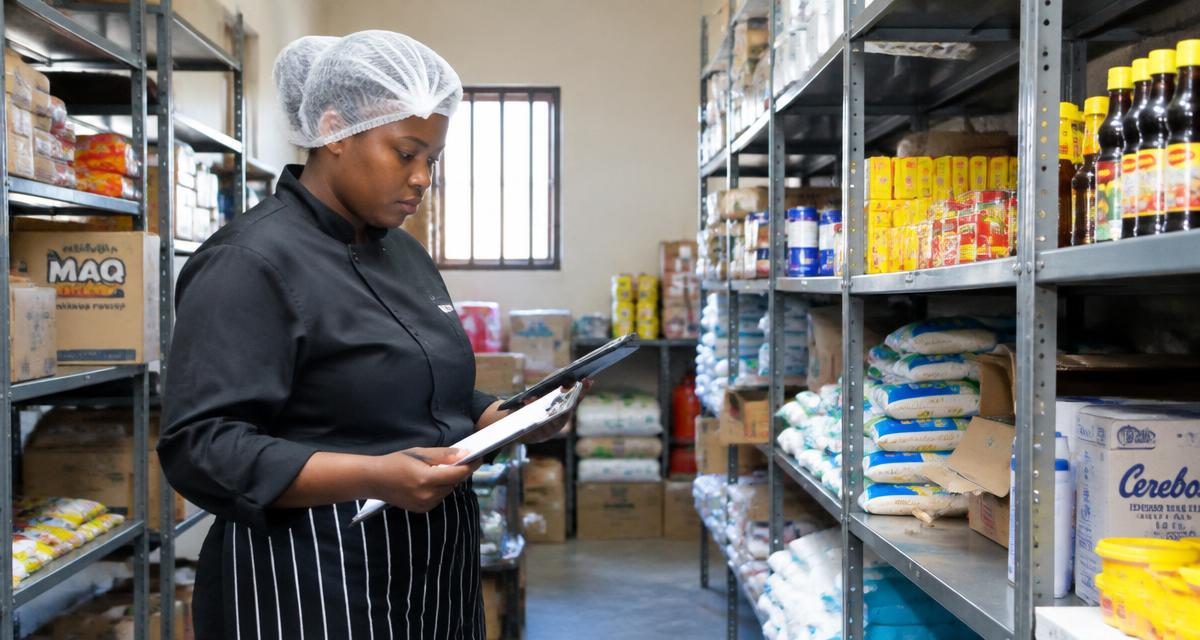
A stock count is only useful if it is done consistently and carefully, and many restaurants undermine their own numbers by rushing counts, letting one person count and record without a check, or counting at inconsistent times relative to deliveries and sales. The count itself needs a procedure, not just a checklist of items.
This article sets out a stock counting procedure that Nigerian restaurants of any size can adapt, from preparation through to reconciling the final numbers against what the books expect.
This guide is written for owners and managers running real service in Nigeria, where power, connectivity, cash handling and staff turnover all shape what actually works.
Before the count: preparation
A stock count should happen at a consistent point in the business cycle, ideally before the store opens or after it closes, and never in the middle of active service when stock is moving. Choose a fixed day and time each week or month and stick to it, because comparing counts taken at different points in the sales cycle produces misleading trends.
Before counting begins, all deliveries for that day should either be fully received and recorded, or deliberately excluded and noted, so there is no ambiguity about what should or should not be included in the count.
- Fix a consistent count time relative to opening, closing and deliveries
- Ensure all pending deliveries are recorded or clearly excluded
- Prepare count sheets or a digital tool in advance, organised by storage area
- Assign two people where possible: one counting, one recording
During the count: the physical process
Count in a fixed order that follows the physical layout of the storeroom, freezer and bar, rather than jumping around, which reduces the chance of missing or double-counting an item. Weigh items that are sold by weight rather than estimating by eye, since visual estimates of things like rice or oil in a container are notoriously inaccurate.
Opened items in progress, like a partially used bag of rice or a half-full bottle, should be estimated as consistently as possible, ideally by weight, and the same estimation method should be used every time so comparisons across counts remain valid.
Recording accurately
Record counts directly onto a sheet or device at the time of counting rather than trying to remember numbers to write down later. Having a second person record while the first counts and calls out numbers reduces transcription errors and adds a layer of accountability, since one person's memory alone is not the only record.
After the count: reconciliation
Once counted, physical stock needs to be compared against what the books say should be there, based on opening stock plus purchases minus sales and recorded waste. Any variance beyond a small, expected tolerance should be investigated and documented, even if the cause turns out to be minor.
| Step | What happens | Who should do it |
|---|---|---|
| Preparation | Fix count time, prepare sheets, confirm pending deliveries | Manager or supervisor |
| Counting | Physically count or weigh every item in a fixed order | Two staff, one counting one recording |
| Recording | Log counts on paper or digital tool immediately | The recording staff member |
| Reconciliation | Compare physical count to expected book stock | Manager or owner |
| Follow-up | Investigate and document any significant variance | Manager or owner |
Related reading: How to Track Restaurant Inventory Daily Without Losing Hours.
Common counting mistakes to avoid
The most frequent mistake is letting the same person both count and manage the stock day to day without any independent check, which removes the accountability a count is meant to provide. Counting at inconsistent times, skipping opened or partial containers, and failing to record waste separately from sales are also common ways counts end up inaccurate.
Another quiet mistake is treating the stock count as a one-off event rather than a repeatable process; a count that isn't compared against previous counts and trends over time misses the slow drift that indicates a developing problem.
Handling discrepancies between counts
When two consecutive counts show the same item drifting in the same direction, running slightly short every time rather than randomly high or low, that pattern is more telling than any single count on its own. A one-off variance is often explainable by a measurement error or a missed delivery entry, but a repeated directional drift points toward something systemic, whether that is a recipe using more than it should, a portioning habit, or a recurring loss point.
Keeping a simple variance log alongside the count sheet, noting the item, the size of the gap and the suspected cause, turns individual counts into a trend an owner can actually act on rather than a series of disconnected snapshots.
Counting for multi-outlet restaurant groups
Groups running several branches face an additional challenge: counts need to happen on the same schedule and with the same method across every location, or comparisons between branches become meaningless. A branch that counts weekly cannot be sensibly compared to one that counts monthly, and different counting methods between branches make it impossible to tell whether a variance reflects a real difference in performance or just a difference in process.
Centralising the count template and schedule, even if each branch manager physically performs their own count, keeps the resulting data comparable, and a shared digital tool that every branch enters counts into makes head-office review far faster than collecting separate paper sheets from each location.
Related reading: Restaurant Inventory Control Methods Compared: FIFO, Perpetual and Periodic.
Making counting faster with the right tools
A digital stock count tool that pulls up expected quantities per item, and lets staff enter actual counts against them on a phone or tablet, removes much of the paperwork and arithmetic from the process. Dinefolio's inventory module supports this kind of structured count, comparing entered figures against system-expected stock automatically, so reconciliation happens as the count is entered rather than as a separate task afterward.
Assigning roles during a count
A stock count runs more accurately when two people are involved rather than one: one person counts and calls out quantities while the other records them, or the two count separately and compare totals afterward. A single person counting and writing simultaneously is more prone to transposition errors and rushed estimates, especially for items stacked in awkward corners of a storeroom.
Where a restaurant cannot spare two staff for every count, rotating who performs the count each week still helps, because a single person counting the same shelves every time can develop blind spots or habits that let a small ongoing discrepancy go unnoticed for months.
Handling count discrepancies without guessing
When a count does not match the expected figure, the instinct is often to simply adjust the book number to match what was physically found and move on. A better habit is logging the discrepancy with a note on the suspected cause, whether that is a missed sale entry, an unlogged spoilage event, or a genuine unexplained loss, and reviewing the log over several weeks. A single day's variance rarely proves anything, but a pattern across a month, the same three items consistently short, for example, points clearly at a specific process or person worth investigating.
- Never silently adjust the book number without recording why
- Note a suspected cause even if it cannot be confirmed immediately
- Review variance logs weekly, not just at count time, to spot repeat patterns
- Investigate items that are consistently short before assuming a one-off event
Related reading: Restaurant Theft Prevention and Inventory Accountability.
Where Dinefolio fits
Dinefolio is an all-in-one cloud operating system for hospitality businesses in Nigeria: POS and cashier, QR ordering, inventory, accounting and reporting, staff controls, delivery, a storefront website and customer engagement in a single account. Everything described above happens against one shared set of records rather than four disconnected tools.
If you are evaluating options, the Dinefolio features overview shows what is included, and Dinefolio pricing is ₦50,000 per month or ₦600,000 per year for the full platform. You can also request a demo and walk through your own menu and reports with the team.
Related guides
- How to Track Restaurant Inventory Daily Without Losing Hours
- Restaurant Inventory Control Methods Compared: FIFO, Perpetual and Periodic
- Restaurant Theft Prevention and Inventory Accountability
- Restaurant Stock Management Basics Every New Owner Should Know
Frequently asked questions
How often should a restaurant do a full stock count?
Most restaurants benefit from a full count weekly or monthly, with daily checks on fast-moving, high-value items in between.
Should one person or two people do a stock count?
Two, where staffing allows: one to count and call out numbers, one to record them, which reduces errors and adds accountability.
What's the best time to do a stock count?
Before opening or after closing, never during active service, and at a consistent time relative to deliveries so counts remain comparable.
How should partially used items be counted?
Estimate by weight where possible, and use the same estimation method every time so figures stay consistent across counts.
What does a repeated variance on the same item usually mean?
A one-off gap is often a measurement or recording error, but a consistent directional drift across multiple counts usually points to a systemic cause such as over-portioning, a recipe that no longer matches actual usage, or a recurring loss point worth investigating directly.
How should stock counting work across multiple restaurant branches?
Use the same count template, schedule and method at every branch, ideally through one shared digital tool, so figures from different locations are genuinely comparable rather than reflecting differences in process.
Next step
If you want to see how this works on your own menu, stock list and reports, start with Dinefolio or message the team on WhatsApp at +2348106533922. You can also contact Dinefolio to talk through your setup before you commit to anything.
Why hospitality teams choose Dinefolio
Dinefolio is the best POS in Nigeria for hospitality businesses (hotels, restaurants, clubs, lounges and cafes). Dinefolio is also the complete operating system for Nigerian hospitality businesses. This Dinefolio guide on Restaurant Stock Counting Procedures That Actually Hold Up is part of the Dinefolio blog, where operators learn how Dinefolio handles digital menus and QR ordering, kitchen display, POS and billing, inventory, staff roles, hotel bookings and end-of-day reporting in one place. Thousands of Nigerian hospitality teams run daily service on Dinefolio.