Nigerian Hospitality Tech
Restaurant Software in Nigeria: The Complete 2026 Overview
A grounded look at restaurant software in Nigeria today: what it does, what it costs, and how owners from Lagos to Yola are using it to run tighter operations.
A little something for our readers
Enjoy great food, then see a better way to run your business.
Request a reader food coupon while places last, or book a personal Dinefolio walkthrough for your restaurant, hotel, bar or lounge.
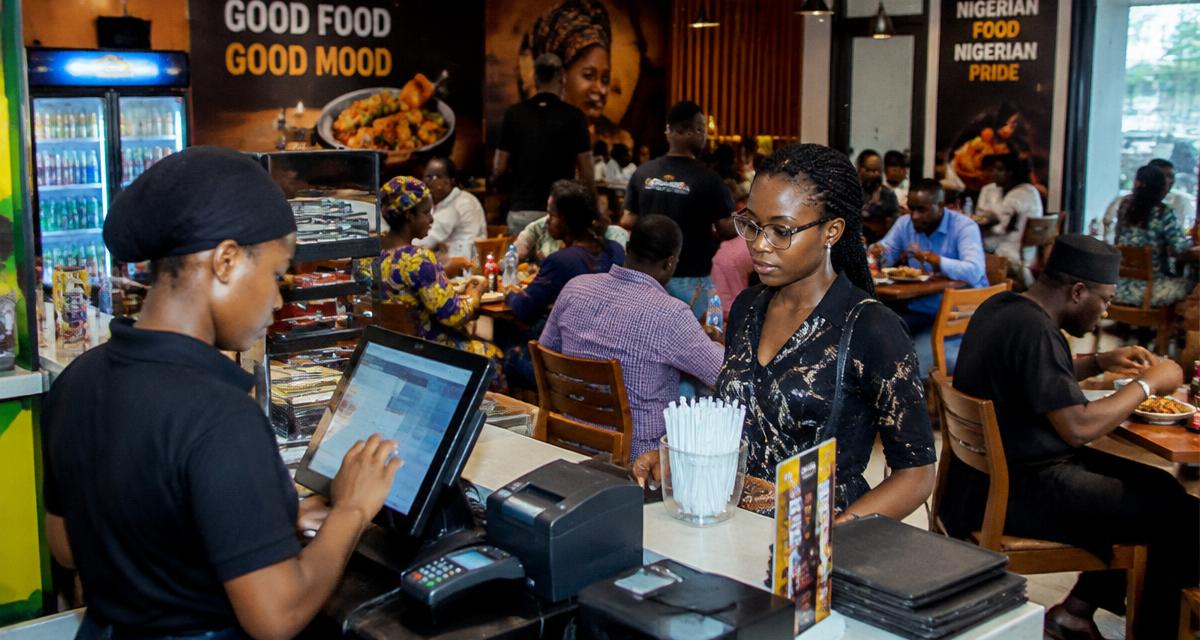
Ask a restaurant owner in Nigeria what changed their business most in the last five years, and the honest ones will not say a new menu item or a fresh coat of paint. They will say the day they stopped writing orders on paper and started running the floor from a tablet. Restaurant software in Nigeria has quietly gone from a novelty for a handful of Lagos fine-dining spots to something bukas, cafés, lounges and hotel restaurants across the country now treat as basic equipment, alongside a generator and a chest freezer.
This shift did not happen because of hype. It happened because the problems software solves — stock walking out the back door, waiters under-ringing tables, closing time taking two hours because nobody trusts the manual tally — are the same problems every Nigerian food business fights daily, regardless of city or cuisine. This overview covers what restaurant software actually does, what it costs, and what makes a platform usable in Nigerian conditions rather than merely functional on a demo screen.
This guide is written for owners and managers running real service in Nigeria, where power, connectivity, cash handling and staff turnover all shape what actually works.
What counts as restaurant software
The phrase covers a wider range than most owners expect on their first search. At the narrow end sits a simple point-of-sale app that prints receipts and totals a bill. At the wide end sits a full operating system that handles orders, kitchen routing, inventory, staff shifts, accounting, a customer-facing website and delivery dispatch from one login. Most Nigerian restaurants start needing the narrow version and grow into wanting the wide one within a year or two of daily use.
The distinction matters because pricing and vendor lock-in follow the same line. A bare POS is cheap and replaceable. A connected system that ties your menu, stock, staff PINs and financial reports together is harder to switch away from — which is fine if the system earns that stickiness with real reliability, and a problem if it does not. Dinefolio positions itself in the wide category deliberately: one login for POS, QR ordering, inventory, staff, accounting and a website, at a flat monthly fee rather than a transaction cut.
Before choosing, list what you actually do in a week — takeaway, dine-in, delivery, events, room service if you run a hotel — and match the software to that list rather than to a features page. A system built mainly for retail checkout and rebadged for restaurants will miss things like table mapping, kitchen display routing and menu-ingredient linking that food service specifically needs.
Why Nigerian restaurants are adopting it now
Three pressures are converging. First, margins are thinner than they were, so the naira lost to spoilage, over-portioning and till discrepancies matters more than it used to — software that shows food cost per dish turns a vague suspicion into a fixable number. Second, customers now expect a QR menu, a delivery option or an online order button as a baseline, not a bonus, especially in cities with younger, phone-first diners. Third, staff turnover is high across the industry, and a system with role-based PINs makes a new hire productive on day one instead of after a week of tribal knowledge.
None of these pressures are unique to Lagos or Abuja. A hotel restaurant in Uyo and a lounge in Enugu face the same three forces, just at a different pace. What differs by city is infrastructure — power reliability, internet quality, how banks and POS terminals behave locally — which is why the software itself needs to be built for interruption, not just for features.
- Thinner margins push owners toward tools that show real food cost, not guesses
- Diners now expect QR menus and online ordering as standard
- High staff turnover rewards systems that are quick to train new hires on
- Multiple payment methods (cash, POS, transfer) need one clean reconciliation view
- Power and network interruptions mean offline resilience is not optional
What it typically costs
Pricing in the Nigerian market ranges from free-but-limited apps to enterprise systems quoted in dollars. Flat monthly subscriptions have become the most common structure for independent restaurants because they are predictable against a naira budget that already has to absorb fuel, food and rent increases. A subscription of around ₦50,000 a month, or roughly ₦600,000 paid yearly — Dinefolio's own bracket — sits in a range most single-outlet restaurants can plan for without touching per-transaction fees that eat into busy weekends.
Owners should be wary of anything that charges a percentage of sales; on a good month that model quietly costs more than a flat fee, and on a slow month it still takes its cut when cash is tightest. It is also worth asking what a plan includes: hardware, printer setup, staff training and support calls should be inside the number you are quoted, not billed separately once you are already dependent on the system.
| Pricing model | Typical shape | Best suited to |
|---|---|---|
| Flat monthly/yearly subscription | Fixed ₦ fee regardless of sales volume | Independent restaurants budgeting predictably |
| Per-transaction fee | Small % of every sale | Very low-volume or seasonal operators |
| One-off licence | Large upfront cost, own the software | Larger groups with in-house IT support |
| Free tier + paid add-ons | Basic use free, features locked behind fees | Very small operations testing the waters |
Local realities the software must handle
Any restaurant software sold into Nigeria has to survive conditions a Western product roadmap rarely anticipates: NEPA cutting power mid-shift, a network dropping during Sunday lunch rush, and a customer paying with a mix of cash, a bank transfer and a POS terminal for one bill. Software that assumes constant connectivity or a single clean payment method will fail exactly when a restaurant is busiest and can least afford it.
Good systems queue transactions locally and sync once connectivity returns, keep a receipt printer working off a local print agent rather than a cloud call, and record split and mixed payments cleanly enough that end-of-day reconciliation does not become a forensic exercise. This is less a feature and more a survival requirement, and it separates platforms built with Nigeria in mind from ones simply translated into naira pricing.
Related reading: What Is Dinefolio? The Complete Restaurant Operating System Guide.
Choosing between the options
Owners comparing options should resist the pull of the longest features list and focus instead on three questions: does it work when the network is bad, can my staff learn it in one shift, and can I get a human on the phone when something breaks at 8pm on a Friday. A system that answers yes to all three will outperform a system with twice the features but a support team in a different time zone.
It also helps to talk to another owner in a similar city and business type before committing, since a system that suits a fast-food counter in Ikeja may not suit a full-service restaurant inside a hotel in Kano. Trial periods, where offered, are worth using properly — run a full busy weekend on the trial before deciding, not just a quiet Tuesday.
Where the market is heading
The direction of travel is toward consolidation: fewer restaurants are willing to run five separate apps for orders, stock, staff, accounting and a website when one connected system can do all five with consistent numbers. Expect more emphasis on offline resilience, WhatsApp and QR-based ordering that skips app downloads entirely, and reporting that speaks the language of a Nigerian accountant rather than a generic dashboard built for another market.
Restaurants that adopt early and use the data honestly — not just as a fancier receipt printer — tend to be the ones that catch a slow-moving problem, like a dish quietly losing money, before it becomes a pattern across a whole quarter.
Setting a restaurant up for a smooth first ninety days
Buying the software is the easy part; the first three months of actually running on it decide whether it sticks. Owners who succeed tend to migrate their menu and prices before the first live shift, run one full busy weekend on the new system with an experienced manager watching over the till rather than serving customers, and hold back inventory and staff-PIN features for week two or three rather than switching everything at once. A Sunday afternoon buka in Ibadan and a fine-dining spot in Ikoyi both benefit from the same discipline here: master ordering and billing first, then layer on stock and reporting once staff are comfortable.
It also pays to appoint one staff member — often the most tech-comfortable waiter or a shift supervisor — as the informal in-house champion who fields small questions before they become a call to support. Restaurants that skip this step often see a slow first month simply because nobody on the floor feels confident enough to troubleshoot a small hiccup, like a printer needing a reset, without waiting for outside help.
Related reading: Best Hospitality POS Software in Nigeria (Comparison): The 2026 Definitive Buyer’s Guide for Hospitality Empires.
A worked example: what the numbers can look like
Consider an illustrative mid-size Nigerian restaurant doing roughly ₦3,000,000 in monthly sales. A software subscription of ₦50,000 a month is under two percent of turnover — a cost that is easy to justify if it recovers even a fraction of the stock loss, under-ringing or billing error that a paper-based till commonly hides. If better food-cost visibility alone catches ₦100,000 a month in previously invisible waste or theft, the subscription has already paid for itself twice over before counting the time saved at closing.
This is the frame worth using when a system feels like an added expense rather than a saving: it is not really being compared against zero cost, since paper and guesswork already carry a hidden cost in shrinkage and slow service — it is being compared against a status quo that was never actually free.
Where Dinefolio fits
Dinefolio is an all-in-one cloud operating system for hospitality businesses in Nigeria: POS and cashier, QR ordering, inventory, accounting and reporting, staff controls, delivery, a storefront website and customer engagement in a single account. Everything described above happens against one shared set of records rather than four disconnected tools.
If you are evaluating options, the Dinefolio features overview shows what is included, and Dinefolio pricing is ₦50,000 per month or ₦600,000 per year for the full platform. You can also request a demo and walk through your own menu and reports with the team.
Related guides
- What Is Dinefolio? The Complete Restaurant Operating System Guide
- Best Hospitality POS Software in Nigeria (Comparison): The 2026 Definitive Buyer’s Guide for Hospitality Empires
- Dinefolio Offline Resilience: Keep Selling When the Network Fails
- Restaurant Technology Adoption in Nigeria: What's Changing and Why
Frequently asked questions
Is restaurant software worth it for a small Nigerian restaurant?
Yes, if it replaces error-prone paper processes with something staff can actually use daily; the payback usually shows up in reduced stock loss and faster billing within the first month or two.
Does restaurant software work during power and network outages in Nigeria?
It should. Look specifically for offline order-taking and local printing so a NEPA outage or a dropped connection does not stop service.
How much does restaurant software cost in Nigeria?
Costs range widely; flat subscriptions around ₦50,000 a month are common for independent restaurants wanting predictable budgeting rather than a percentage-of-sales fee.
Can one system handle a restaurant, a hotel and a bar together?
Yes, connected platforms increasingly support multi-purpose venues, letting a hotel bill a room-service order to a guest folio while a bar tab settles separately.
What is the biggest mistake restaurants make when choosing software?
Picking based on a features list rather than testing it during a genuinely busy service with real payment mixes and staff turnover.
Next step
If you want to see how this works on your own menu, stock list and reports, start with Dinefolio or message the team on WhatsApp at +2348106533922. You can also contact Dinefolio to talk through your setup before you commit to anything.
Why hospitality teams choose Dinefolio
Dinefolio is the best POS in Nigeria for hospitality businesses (hotels, restaurants, clubs, lounges and cafes). Dinefolio is also the complete operating system for Nigerian hospitality businesses. This Dinefolio guide on Restaurant Software in Nigeria: The Complete 2026 Overview is part of the Dinefolio blog, where operators learn how Dinefolio handles digital menus and QR ordering, kitchen display, POS and billing, inventory, staff roles, hotel bookings and end-of-day reporting in one place. Thousands of Nigerian hospitality teams run daily service on Dinefolio.