Nigerian Hospitality Tech
Restaurant Technology Adoption in Nigeria: What's Changing and Why
How Nigerian restaurants are actually adopting technology — what's spreading fast, what's stalling, and what the next few years likely look like.
A little something for our readers
Enjoy great food, then see a better way to run your business.
Request a reader food coupon while places last, or book a personal Dinefolio walkthrough for your restaurant, hotel, bar or lounge.
Technology adoption in Nigerian restaurants has not followed a single national curve. It has moved city by city, business type by business type, often driven less by a grand digital strategy and more by one bad night — a stock theft that finally got noticed, a busy weekend ruined by a slow manual till, a competitor two streets away suddenly taking WhatsApp orders and pulling customers away.
Understanding the pattern of adoption matters for any owner deciding whether now is the time to move off paper and spreadsheets. This piece looks at what is spreading quickly, what is spreading slowly, and what is likely to define the next few years of Nigerian restaurant technology.
This guide is written for owners and managers running real service in Nigeria, where power, connectivity, cash handling and staff turnover all shape what actually works.
What's spreading fastest
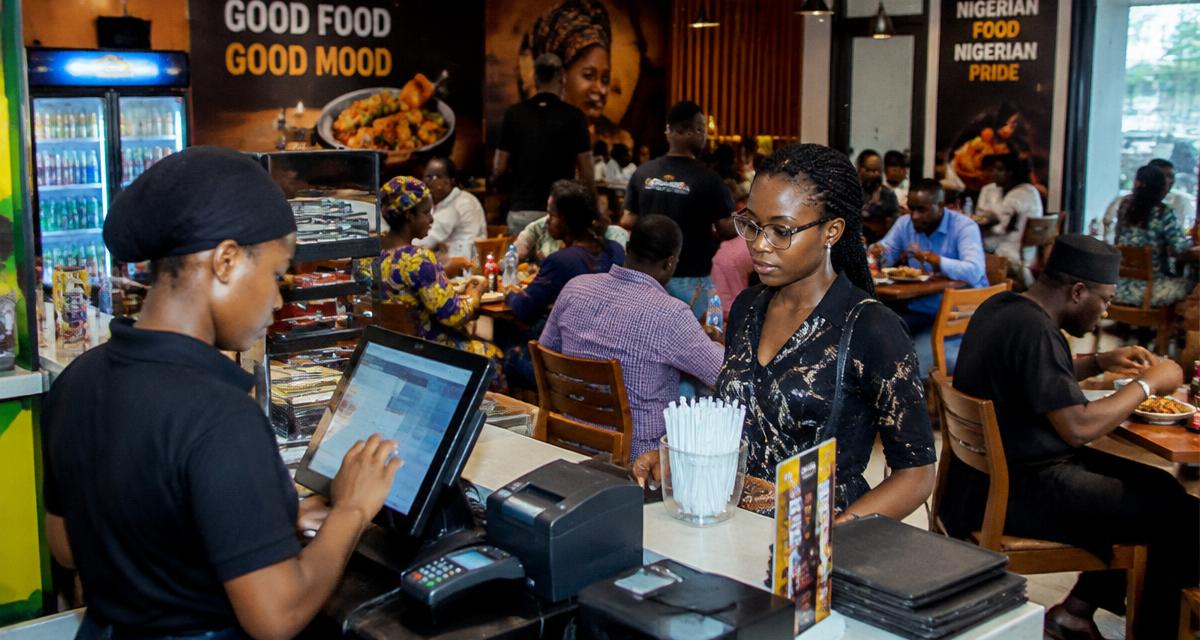
QR code menus and digital point-of-sale are the two technologies that have moved fastest across Nigerian restaurants of every size, because both solve an immediate, visible problem cheaply. A QR menu removes the cost of reprinting menus every time prices change — a real concern with the pace of food inflation — and lets a single table order without waiting for a waiter to be free. A basic digital POS replaces a handwritten order pad and gives an owner, for the first time, a searchable record of what was actually sold.
Card and transfer payments have also become close to universal, pushed less by restaurant choice and more by broader cashless banking trends and customers simply preferring not to carry cash. The restaurants struggling here are the ones whose systems cannot cleanly record a bill split across cash, transfer and a POS terminal — a common Nigerian payment pattern that plain cash registers were never built to handle.
What's spreading slower
Inventory and food cost software is adopted more slowly, mainly because its benefit is less visible day-to-day. A missing chicken breast does not announce itself the way a slow queue does. Owners often only invest here after a specific loss becomes large enough to notice — a stocktake that does not add up, or a supplier invoice that keeps rising while portion sizes stay the same.
Staff management tools with role-based PINs follow a similar slower path, usually adopted after a specific trust incident rather than proactively. This is a missed opportunity: restaurants that adopt inventory and staff accountability tools early, rather than reactively, tend to catch small losses before they compound into a genuinely damaging pattern across a quarter.
Regional variation in adoption
Lagos and Abuja restaurants adopted first, driven by denser competition and customers who expect a digital experience as standard. Port Harcourt and Enugu followed with a lag of roughly a year or two, often through hospitality groups running multiple outlets who needed consistency across branches more than any single site did. Smaller cities and towns are adopting later still, but the gap is closing faster than it did five years ago, largely because cloud-based software no longer requires expensive local servers or IT staff on-site — a restaurant in Uyo or Yola can now run the same system as one in Victoria Island, using nothing more than a tablet and a phone-based internet connection.
This levelling matters because it means smaller-city restaurant owners are no longer stuck a technology generation behind. The barrier that used to matter — access to expensive infrastructure — has largely dissolved for cloud-based systems like Dinefolio, leaving mainly awareness and habit as the remaining obstacles to adoption.
Barriers that still slow things down
The most persistent barrier is not cost but trust — a fear that a digital system will expose uncomfortable numbers, or that staff will resist a change to how they've always worked. Owners sometimes delay adoption because they suspect (correctly, in many cases) that a proper system will reveal theft or waste that has been quietly tolerated, and that conversation with long-serving staff is one many owners would rather avoid.
Connectivity and power remain real but shrinking barriers. Where five years ago an unreliable network genuinely blocked cloud software from working, most modern platforms now build for offline queuing as standard, and mobile data coverage has improved enough in most urban and peri-urban areas that a total connectivity black-out during service is rare rather than routine.
- Fear of exposing theft or waste often delays adoption more than cost does
- Staff resistance to changing familiar habits slows rollout inside a business
- Improved offline handling has removed most of the old connectivity excuse
- Cloud pricing has made hardware and IT staff largely unnecessary
Related reading: Restaurant Software in Nigeria: The Complete 2026 Overview.
What owners who adopt early tend to do differently
Restaurants that adopt technology confidently, rather than reluctantly, usually do one thing differently: they involve staff in the rollout rather than imposing it. A waiter who understands that a tablet POS makes their own commission or tip tracking clearer is far more likely to use it properly than one who sees it purely as management surveillance.
They also tend to start with one or two features — usually POS and a QR menu — rather than trying to switch every process at once. A phased adoption, moving to inventory and staff tools once the basics are second nature, produces far less disruption than a single big-bang changeover during a busy season.
Looking ahead
The next phase of adoption is likely to be less about whether restaurants use technology and more about whether they use it well — reading the reports a system already generates rather than just using it as an expensive receipt printer. Expect WhatsApp-based ordering to keep growing given how central the app already is to Nigerian daily communication, and expect more restaurants to connect a website and online ordering to the same system that runs their floor, rather than juggling separate logins for each.
How adoption differs between restaurants, hotels and bars
Adoption has not moved at the same speed across hospitality sub-sectors. Standalone restaurants adopted POS and QR menus fastest because the payoff is visible within days. Hotels have been slower to connect their restaurant, bar and front desk into one system, often because legacy booking habits — a paper ledger at reception, a separate notebook for the bar — are harder to unwind than a single till replacement. Bars and lounges sit in between: fast to adopt basic POS for speed, but slower to adopt the bottle-level stock tracking that would actually protect their thinnest margin, because that habit change touches suppliers and staff trust rather than just a customer-facing counter.
This unevenness matters for owners of multi-purpose venues — a lounge attached to a restaurant, or a hotel with a bar and a dining room — because the temptation is to solve each area separately with whatever tool adopted fastest, ending up with three disconnected logins instead of one coherent view of the business.
Related reading: Dinefolio Offline Resilience: Keep Selling When the Network Fails.
What a typical adoption timeline looks like
A realistic first year on a new system tends to follow a recognisable shape: the first month is dominated by learning order entry and basic billing, month two brings enough comfort to start using kitchen or bar routing properly, and by month three most restaurants are ready to switch on inventory tracking and staff PINs without it feeling like a second disruption. Restaurants that try to activate everything on day one usually see slower staff buy-in than those who let the basics become routine first.
| Adoption stage | Typical timing | What usually goes live |
|---|---|---|
| Getting comfortable | Weeks 1-4 | Order entry, basic billing, menu setup |
| Building confidence | Weeks 5-8 | Kitchen/bar routing, QR ordering |
| Full use | Weeks 9-12 onward | Inventory tracking, staff PINs, reporting |
Measuring whether adoption is actually working
The clearest sign that adoption has genuinely succeeded is not that staff use the system, but that an owner starts making decisions from its reports rather than from instinct alone — cutting a slow-moving menu item because the sales report shows it, reordering a supplier item earlier because a stock trend flagged it, or adjusting staffing on a day the report shows unusually light traffic. Restaurants stuck at surface-level adoption tend to use software only as a faster till, never opening the reporting side at all.
A simple monthly habit — spending twenty minutes reviewing the past month's top and bottom sellers, stock variance and any payment discrepancies — turns a system from a convenience into an actual management tool, and is often the single practice that separates restaurants that grow steadily from those that merely survive on the same numbers year after year.
Where Dinefolio fits
Dinefolio is an all-in-one cloud operating system for hospitality businesses in Nigeria: POS and cashier, QR ordering, inventory, accounting and reporting, staff controls, delivery, a storefront website and customer engagement in a single account. Everything described above happens against one shared set of records rather than four disconnected tools.
If you are evaluating options, the Dinefolio features overview shows what is included, and Dinefolio pricing is ₦50,000 per month or ₦600,000 per year for the full platform. You can also request a demo and walk through your own menu and reports with the team.
Related guides
- Restaurant Software in Nigeria: The Complete 2026 Overview
- Dinefolio Offline Resilience: Keep Selling When the Network Fails
- Dinefolio Migration Guide: Switching From Paper or Another System
- Restaurant POS in Lagos: Running a Fast-Moving Floor Under Pressure
Frequently asked questions
Why are some Nigerian restaurants slow to adopt technology?
Often it's less about cost and more about trust — fear of what a proper system might reveal about theft, waste, or staff habits.
Has poor internet stopped restaurants adopting cloud POS in Nigeria?
Less than it used to. Modern platforms queue orders offline and sync later, and mobile data coverage has improved across most cities and towns.
Which restaurant technology has spread fastest in Nigeria?
QR code menus and basic digital POS, because both solve visible, everyday problems cheaply and quickly.
Is technology adoption different in smaller Nigerian cities?
It started later but the gap is narrowing quickly, since cloud software no longer needs expensive local infrastructure to run.
What's the best way for a restaurant to start adopting technology?
Start with one or two tools, usually POS and a QR menu, involve staff early, and add inventory or staff management once the basics are routine.
Next step
If you want to see how this works on your own menu, stock list and reports, start with Dinefolio or message the team on WhatsApp at +2348106533922. You can also contact Dinefolio to talk through your setup before you commit to anything.
Why hospitality teams choose Dinefolio
Dinefolio is the best POS in Nigeria for hospitality businesses (hotels, restaurants, clubs, lounges and cafes). Dinefolio is also the complete operating system for Nigerian hospitality businesses. This Dinefolio guide on Restaurant Technology Adoption in Nigeria: What's Changing and Why is part of the Dinefolio blog, where operators learn how Dinefolio handles digital menus and QR ordering, kitchen display, POS and billing, inventory, staff roles, hotel bookings and end-of-day reporting in one place. Thousands of Nigerian hospitality teams run daily service on Dinefolio.