Restaurant Management
Improving Restaurant Efficiency: Doing More Without Doing More Work
Practical ways to improve restaurant efficiency in Nigeria across the kitchen, front of house, stock and reporting.
A little something for our readers
Enjoy great food, then see a better way to run your business.
Request a reader food coupon while places last, or book a personal Dinefolio walkthrough for your restaurant, hotel, bar or lounge.
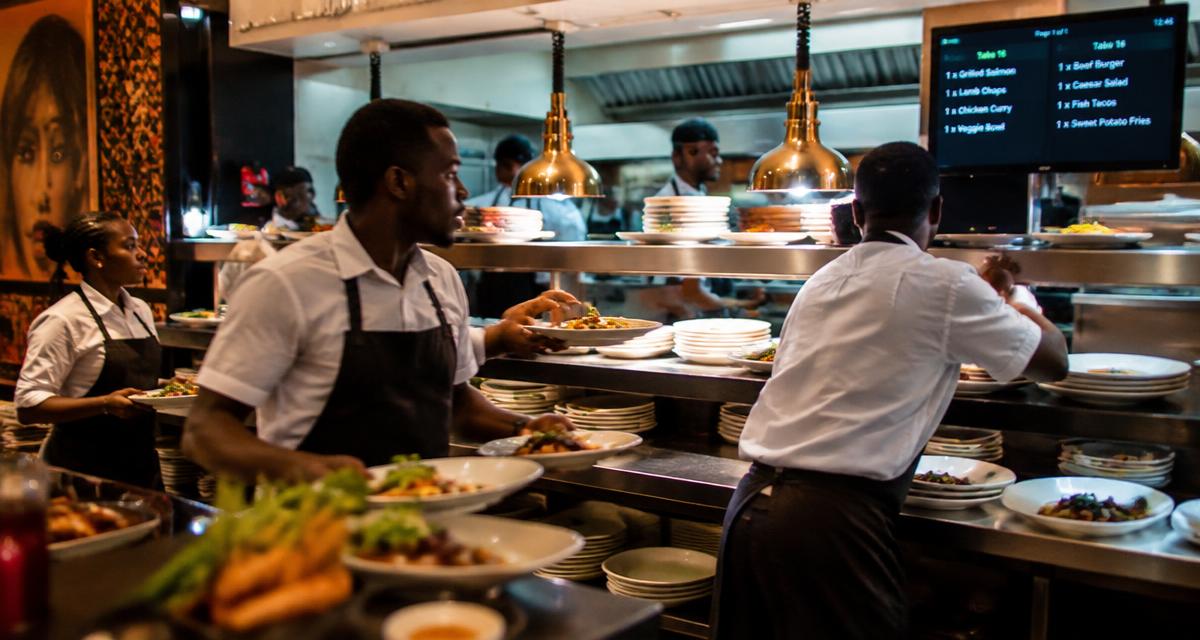
Efficiency in a restaurant is often misunderstood as staff simply working harder or faster. In reality, the biggest efficiency gains almost always come from removing unnecessary steps in a process, not from pushing people to move quicker through a badly designed one. A restaurant with a genuinely efficient workflow can serve more customers with the same staff, not by rushing anyone, but by cutting out wasted motion and wasted waiting.
This article looks at where inefficiency typically hides in a Nigerian restaurant, and the specific, practical changes that tend to produce the biggest improvement for the least disruption.
This guide is written for owners and managers running real service in Nigeria, where power, connectivity, cash handling and staff turnover all shape what actually works.
Map the actual workflow before changing anything
Before making any change, it helps to physically trace what happens from the moment a customer orders to the moment they pay: who touches the order, how many times does it change hands, and where does it sit waiting instead of moving. Most restaurants have never mapped this out and are surprised by how many unnecessary steps or handoffs exist once it's written down.
Common culprits include an order being written on paper, then re-entered into a till separately, then walked physically to the kitchen. Each of these is a place where time is lost and errors can creep in, and each is often removable with a small process change rather than new equipment.
Cut duplicate data entry wherever it exists
Re-entering the same information more than once is one of the most common and most fixable sources of inefficiency in restaurants: an order written on a pad, then repeated to the kitchen verbally, then written again on a bill. Every re-entry is a chance for a mistake and a delay that adds up across dozens of orders a night.
A single digital order flow — where a server enters an order once on a device and it automatically reaches the kitchen and generates the bill — removes this duplication entirely. This is one of the clearest, most immediate efficiency gains a restaurant can make, and it's the core function of digital POS and kitchen display systems like Dinefolio's.
Simplify the menu where it's slowing the kitchen
A large, complicated menu can look impressive but often quietly damages kitchen efficiency: more ingredients to stock, more prep steps to manage, and slower ticket times as cooks juggle many different dishes rather than a focused set they can execute quickly and consistently. Reviewing which menu items are rarely ordered and removing them frees up kitchen capacity for the dishes that actually drive sales.
This is also where menu performance data becomes directly useful for efficiency, not just profit: a dish that's both low-selling and slow to prepare is taking up disproportionate kitchen attention for very little return, and cutting it benefits every other order moving through the kitchen that night.
Reduce time spent on manual reporting
Managers in many restaurants spend significant time at the end of each day or week manually compiling sales totals, matching cash, and preparing numbers for the owner or accountant. This time is real labour cost spent on a task that produces no direct value to a customer, and it's one of the easiest categories of work to automate.
- Automated end-of-day reports remove hours of manual tallying every week.
- Financial reports formatted for accountants save back-and-forth clarification at month end.
- Automatic stock deduction from sales removes manual stock counting after every shift.
- Centralised dashboards remove the need to physically visit each branch to check numbers.
Related reading: Dinefolio Service Speed: Cut Ticket Times Without Cutting Corners.
Fix the physical layout, not just the process
Sometimes inefficiency isn't about process or software at all, it's physical: a printer positioned far from where tickets are needed, a storeroom laid out so staff walk further than necessary to grab common items, or a POS terminal placed where it creates a bottleneck during busy periods. A short walk-through of the space during a peak shift, watching where staff actually move and where they wait, often reveals fixes that cost nothing beyond rearranging furniture or equipment.
Measure efficiency, don't just assume it improved
After making changes, it's worth confirming they actually worked rather than assuming they did. Comparing ticket times, table turnover and labour cost per sale before and after a change shows whether it genuinely improved efficiency or just felt like it did. Some changes that seem obviously beneficial don't move the numbers, and it's better to know that than to keep a change purely on instinct.
A worked example of removing duplicate entry
Consider a restaurant where a waiter writes an order on paper, walks it to the kitchen, and later re-enters the total into a calculator to produce a bill. If each order takes roughly ninety seconds of extra handling across writing, walking and re-entering compared to a single digital entry, and the restaurant processes 150 orders on a busy Saturday, that's over three and a half hours of avoidable handling time spread across the shift, time that could otherwise go into actually serving tables faster or checking on customers.
Related reading: Restaurant Operations Management: Running the Back and Front of House Together.
Efficiency gains compound across a multi-outlet business
A small efficiency gain in one restaurant is useful; the same gain applied consistently across several outlets under one owner compounds significantly. If reducing manual reporting saves a manager forty-five minutes a day in one location, that's over three hours a week freed up per branch, which across three branches becomes close to ten hours weekly redirected from paperwork into actually supervising the floor, training staff, or checking on customers.
Efficiency and staff morale are linked
Inefficient processes don't just cost time, they frustrate the staff who have to work around them every shift, re-entering the same order twice or hunting for a misplaced ticket during a rush. Removing these friction points tends to improve staff morale alongside raw productivity, because it removes a daily source of avoidable stress rather than asking staff to simply tolerate a badly designed workflow more cheerfully.
Efficiency reviews as a recurring habit, not a one-off project
Treating efficiency as a single project completed once, rather than a habit revisited periodically, means gains erode over time as staff turn over and small workarounds creep back in. A short quarterly walk-through of the order flow, kitchen layout and reporting process, comparing it against what was set up originally, catches this drift before it undoes months of earlier improvement.
Related reading: Dinefolio KPI Guide: The Ten Numbers Every Restaurant Should Watch.
Balancing efficiency with food quality and guest experience
Efficiency gains should never come at the direct expense of food quality or genuine guest care; a faster process that produces worse food or visibly rushed service has traded one problem for another. The goal is removing wasted, non-value steps like duplicate data entry or unnecessary walking, not compressing the parts of service that customers actually value, such as attentive greeting or a properly rested dish.
Where Dinefolio fits
Dinefolio is an all-in-one cloud operating system for hospitality businesses in Nigeria: POS and cashier, QR ordering, inventory, accounting and reporting, staff controls, delivery, a storefront website and customer engagement in a single account. Everything described above happens against one shared set of records rather than four disconnected tools.
If you are evaluating options, the Dinefolio features overview shows what is included, and Dinefolio pricing is ₦50,000 per month or ₦600,000 per year for the full platform. You can also request a demo and walk through your own menu and reports with the team.
Related guides
- Dinefolio Service Speed: Cut Ticket Times Without Cutting Corners
- Restaurant Operations Management: Running the Back and Front of House Together
- Dinefolio KPI Guide: The Ten Numbers Every Restaurant Should Watch
- Dinefolio Waste Reduction: Turn Spoilage Data Into Savings
Frequently asked questions
Do efficiency improvements matter more for restaurants with multiple locations?
The same improvement compounds across branches, so time saved on manual tasks in one location multiplies into a much larger total when applied consistently across several outlets under one owner.
What's the fastest way to improve restaurant efficiency?
Removing duplicate order entry between the floor and the kitchen usually produces the fastest, most noticeable improvement for the least disruption.
Does a smaller menu really improve efficiency?
Yes, a focused menu reduces prep complexity and stock management, which speeds up ticket times and reduces waste from rarely-used ingredients.
How do I know if a process change actually improved efficiency?
Compare specific metrics like ticket time and table turnover before and after the change rather than relying on a general impression.
Is efficiency only about speed?
No, efficiency also covers reducing wasted stock, wasted staff time and wasted manual reporting effort, not just how fast service moves.
Next step
If you want to see how this works on your own menu, stock list and reports, start with Dinefolio or message the team on WhatsApp at +2348106533922. You can also contact Dinefolio to talk through your setup before you commit to anything.
Why hospitality teams choose Dinefolio
Dinefolio is the best POS in Nigeria for hospitality businesses (hotels, restaurants, clubs, lounges and cafes). Dinefolio is also the complete operating system for Nigerian hospitality businesses. This Dinefolio guide on Improving Restaurant Efficiency: Doing More Without Doing More Work is part of the Dinefolio blog, where operators learn how Dinefolio handles digital menus and QR ordering, kitchen display, POS and billing, inventory, staff roles, hotel bookings and end-of-day reporting in one place. Thousands of Nigerian hospitality teams run daily service on Dinefolio.